
When justice feels distant, it is often women who bring it closer.
In communities where courts are far away, stigma silences survivors, and the law feels inaccessible, access to justice depends not only on institutions, but on trusted local actors who can translate legal rights into lived protection. Justice, in these contexts, is not only delivered in courtrooms, but it is built in communities.
What Access to Justice Means
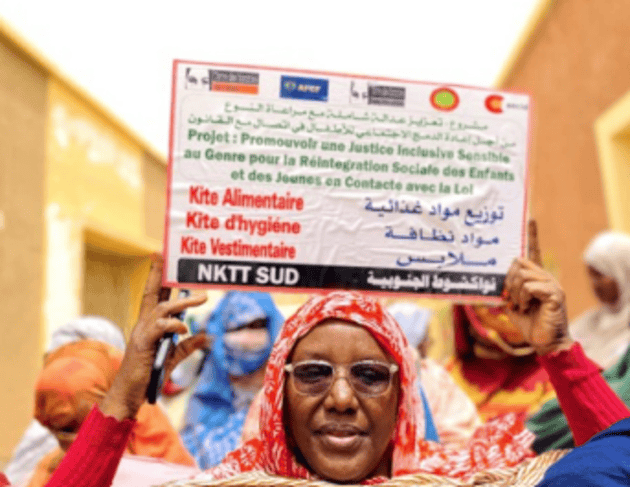
Access to justice is more than resolving conflicts in court, it is about creating meaningful pathways for people to assert their rights, seek protection, and preserve their dignity.
For women, children, refugees, and survivors of gender-based violence (GBV), those pathways are often obstructed by structural barriers like limited legal awareness, geographic distance from formal systems, economic precarity, social stigma, and deeply rooted norms that blame victims and shield perpetrators.
True access to justice therefore cannot rely on legal reform alone. It requires trusted intermediaries, community education, psychosocial support, and sustained mentorship.
AFCF’s Holistic Approach
In Mauritania, WLP’s partner Association of Female Heads of Households (AFCF) is strengthening that infrastructure by training and mentoring women leaders who connect communities to the formal justice system while simultaneously providing direct community support.
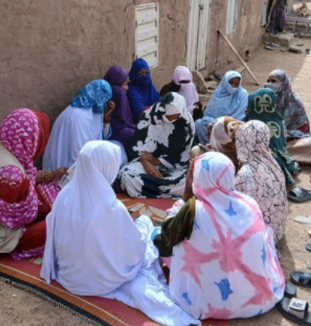
Rather than treating justice as a single legal transaction, AFCF approaches it as a continuum of awareness, mediation, protection, referral, and institutional reform working together. Throughout this integrated model, women are not passive beneficiaries of justice systems, they become architects of access.
AFCF empowers two key groups of community leaders: Muslih (mediators) and Mourchidates (female religious guides). Through comprehensive training programs, AFCF equips women with legal literacy, mediation techniques, participatory leadership skills, and the tools to connect legislation on paper and justice in practice.
Strengthening the Legal Pathways
Through its Islah project, AFCF is reinforcing formal justice mechanisms by revitalizing the role of the Muslih as recognized mediators within Mauritania’s legal framework.
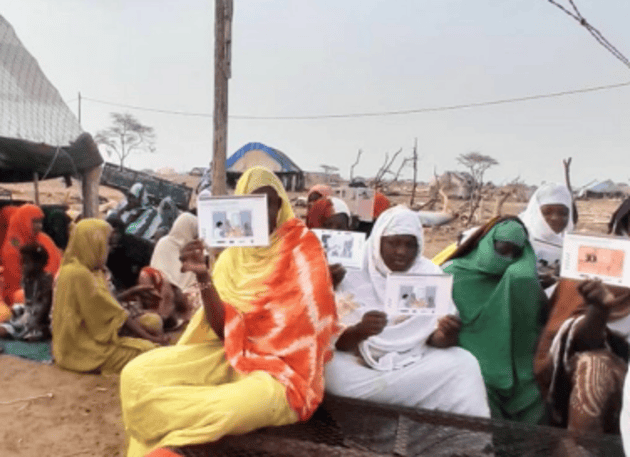
Since 2023, AFCF has trained Muslihs in criminal mediation, conciliation techniques, and legal rights. In tandem, the organization has conducted community-level awareness campaigns, through radio programming and in-person outreach, reaching nearly 5,000 people in one year and supporting more than 400 individuals in accessing legal assistance and conflict resolution services.
AFCF's collaboration with the Ministry of Justice has resulted in official recognition of the Muslih as mediators within the national legal system. This formal acknowledgment strengthens institutional trust while expanding accessible entry points into justice for vulnerable populations.
Opening New Community Pathways
Legal recognition alone, however, is not sufficient. At the community level, AFCF mobilizes Mourchidates to address the social norms and narratives that often prevent women and children from seeking justice in the first place.
In the past year, AFCF has trained a cohort of 50 Mourchidates across multiple provinces – including Trarza, Guidimagha, Nouakchott, Tiris-Zemmour, Hodh El Gharbi, and Hodh-Charghy – equipping them with participatory leadership methods, mediation skills, and public communication tools.
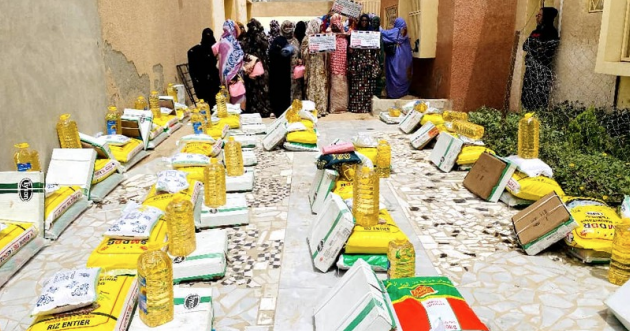
These Mourchidates have conducted 18 community sessions addressing GBV, tolerance, and social cohesion. Through dialogue and engagement, they help dismantle extremist narratives, challenge harmful practices, and create space for conversations about rights within culturally grounded frameworks. Beyond awareness-raising, the Mourchidates also provide direct support - referring survivors to appropriate services, distributing food and hygiene kits in crisis situations, and mediating family disputes in high-risk situations.
As trusted religious and community actors, Mourchidates reshape local understandings of women’s and children’s rights, helping communities see justice not as an external intervention, but as a shared responsibility.
Today, many of these women are invited to participate in municipal committees and local decision-making initiatives, contributing to social and educational policies. What began as community mediation is evolving into sustained civic leadership.
Community Justice as a Gateway to Equality
Together, the Mourchidates and Muslihs illustrate a critical lesson - access to justice is a gateway to gender equality.
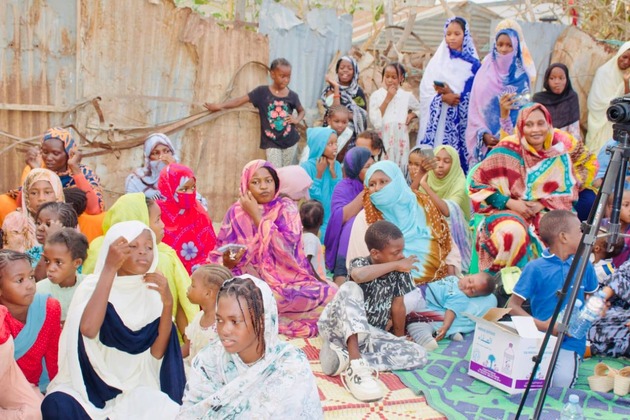
By bridging formal institutions and community trust, AFCF’s holistic approach strengthens both systems and social norms. It ensures that justice mechanisms do not remain distant authorities, but become accessible tools for protecting human dignity.
This model demonstrates that sustainable justice reform depends not only on laws, but on the feminist infrastructure that enables people to use them - the counselors, mediators, educators, and community leaders who translate rights into protection. In Mauritania, women are not simply navigating the justice system. They are reshaping it. And in doing so, they offer a powerful example of how community-centered justice can advance equality - not only locally, but as part of a broader global movement to make rights real for all.