Democratic Association of Moroccan Women

Democratic Association of Moroccan Women

L'Association Démocratique des Femmes du Maroc
Rabat

ADFM advances the rights of women in Morocco and the MENA region through advocating for legal reforms that promote women’s social, economic, and political equality with men, monitoring compliance with local laws and international human rights agreements, and mobilizing women’s rights campaigns.

Click Here to Access Resources for Moroccan Activists

Partner Focus Areas

Promoting women's economic and social rights
Mainstreaming gender in public policies
Culture of equality and ending sexism
Government accountability for human rights

Partnership Highlights

Partner since 2000
Family law reform focused on inheritance
Grassroots capacity building for advocacy
Youth leadership and civic engagement
Read more
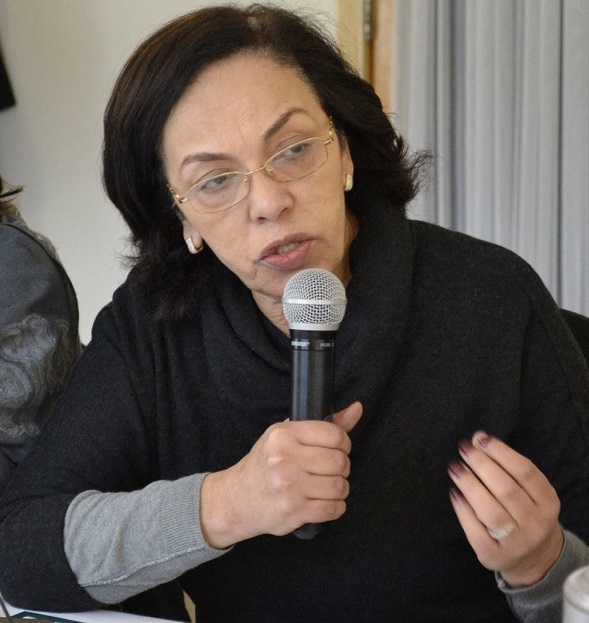
Rabea Naciri at family law meeting CSW61

Rabe’a Naciri, founding member of ADFM, speaks during WLP's Family Law Reform Meeting for the 61st session of the Commission on the Status of Women in New York.

About ADFM

Association Démocratique de Femmes de Maroc (ADFM), founded in June 1985, has organized countless protests, submitted dozens of policy recommendations, led hundreds of workshops, and inspired and empowered thousands of grassroots women to take the lead on making social, economic, and political changes in their communities. Today, ADFM promotes women’s economic and social rights, works to reform laws and policies to support gender equality, fights to overturn sexist stereotypes, and assists individuals and organizations to increase their capacity to mobilize on behalf of women’s rights. ADFM’s goal is to strengthen women’s power and influence in the juridical, political, economic, and social spheres to build an egalitarian, democratic, and sustainable society.
 
ADFM was among the original WLP partners when WLP was founded in 2000, and it has contributed greatly to the WLP partnership by sharing its experience, expertise, data, and best practices. ADFM, in return, has benefited from WLP’s learning and leadership methodologies and curricula, international network, and online training workshops, as well as collaborations with the other organizations in the partnership. ADFM works primarily in Arabic and French. 

Recent Accomplishments

  • Strengthened feminist leadership through national training programs for young advocates, supporting emerging leaders from civil society organizations across Morocco. 
  • Hosted international Training-of-Trainers institutes to build facilitation skills and strengthen women’s and youth civic engagement across multiple countries. 
  • Led rapid-response advocacy and training following national emergencies, integrating gender-based violence prevention into disaster response efforts. 
  • Advanced long-term advocacy on family law reform, contributing to renewed national debate and government commitments to revise discriminatory legal provisions. 
  • Successfully advocated for land rights for Soulaliyate women, resulting in policy changes ensuring more equitable access to collective land and compensation. 
  • Coordinated national civil society coalitions to produce parallel reports for international human rights monitoring mechanisms, including Beijing+ and CEDAW processes. 
  • Led nationwide campaigns on family law reform, abortion rights, and social security policy, contributing to expanded public debate and policy proposals grounded in human rights standards. 
  • Contributed to legislative reforms addressing violence against women, sexual harassment, abortion access, and trafficking protections. 
  • Produced research and policy analysis on inheritance law, culminating in national advocacy materials and reform proposals. 
  • Supported the development and strengthening of national networks providing services for survivors of violence and legal support for women.
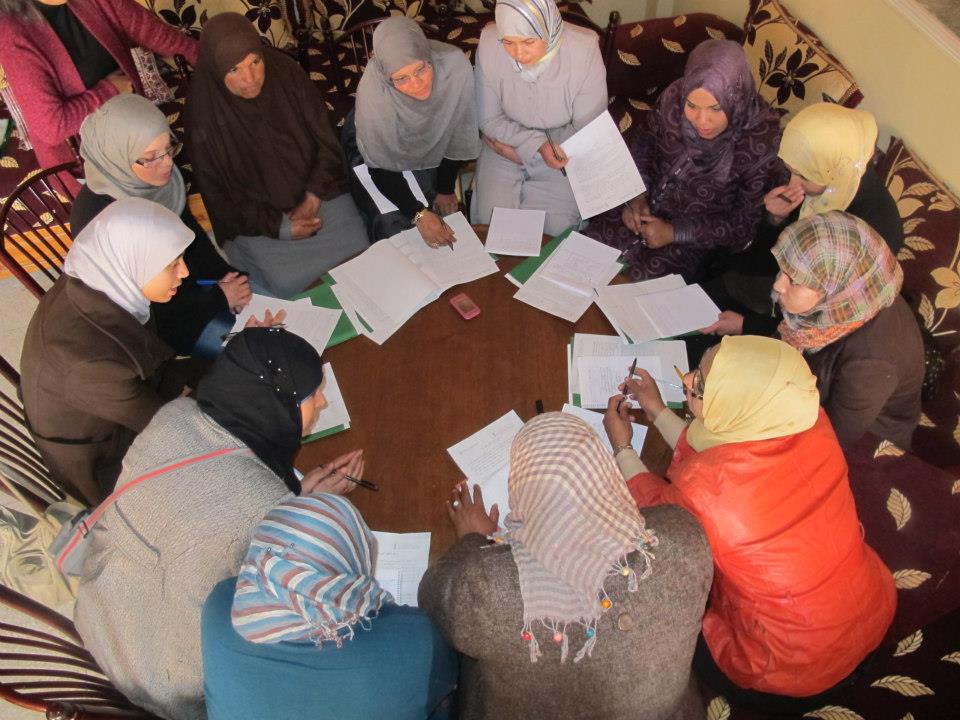
Morocco leadership training 2013

Participants discuss women's roles in decision-making at an ADFM leadership training in Rabat.

Organizational Programs and Activities

Soulaliyate Women

  • Since 2007, ADFM has worked for the recognition of Soulaliyate women’s right to their collective lands. Soulaliyates is the name given to tribal women who have lived for generations on collective lands in Morocco. As the lands have been seized by the government and/or privatized, much of the compensation and other benefits have gone to men. Single, divorced, or widowed women are frequently left with no land, no income, and no prospects. ADFM’s advocacy campaign for recognition of Soulaliyates as persons entitled to land and land benefits has had numerous successes, including the issuance of three ministerial circulars providing for equality between women and men in terms of access to land; the launch by the government of a national dialogue regarding the reform of the legal status of collective lands; Soulaliyate women's participation in land management bodies and decision-making positions; and, in July 2018, for the first time in Morocco, the equal allocation of land and compensation for Soulaliyate women and men from the Kenitra Province.
  • Today, the Soulaliyate women’s movement is a national movement that inspires and engages other civil rights campaigns in Morocco.

Family Law and the Penal Code reform

  • ADFM is monitoring the implementation of Morocco’s Family Code (the Moudawana). In recent years, ADFM has identified priority actions to advocate for the reform of the family code in accordance with the provisions of the 2011 Constitution and the international commitments of Morocco. The family code has not been reformed for more than 13 years (2004) and still permits many forms of discrimination and violence against women, such as polygamy and the marriage of minors. 
  • ADFM is engaged in ongoing advocacy for reforming the penal code to better protect women victims, and to radically overhaul the laws relating to gender-based violence.  
Soulaliyate Women March

Soulaliyate women hold up the banner of WLP’s partner in Morocco, ADFM, as they march towards the parliament building in Rabat to demand equal rights to their ancestral lands.

Capacity-building workshops and programs

  • ADFM conducts capacity-building trainings for various constituencies throughout Morocco. These have included grassroots women, Soulaliyate women, local NGOs and youth organizations, university students, the media, and civil servants and government officials, among others. The subject matter varies depending on the participants, but covers a range of topics from leadership to techniques for monitoring the implementation of legislation. ADFM uses WLP’s curricula in trainings, which have helped ADFM consolidate its work with other institutions, organizations, and networks. 

Monitoring compliance and reporting on women’s rights 

  • ADFM compiles shadow reports and lobbies the monitoring committees during periodic country reviews by CEDAW, Beijing +20, ICESCR, UPR and other international bodies. 
  • ADFM participates in the regional Equality Without Reservation campaign, advocating for the removal of all reservations to the international Convention on the Elimination of All Forms of Discrimination Against Women (CEDAW), ratification of the Convention’s Optional Protocol, and full implementation of the Convention by MENA governments, to fully realize women’s human rights and gender equality in the region.
  • ADFM has been engaged in the EuroMed campaign to expand the number of country accessions to the Istanbul Convention on Preventing and Combating Violence against Women and Domestic Violence, a campaign launched on the occasion of the annual 16 Days of Activism against Gender-Based Violence campaign  in 2016.

Before meeting with [ADFM], the women of my tribe were like a closed pomegranate. Today, not only have we come to know our rights, but we have also come to defend them.

Hajiba, Chebbaka tribe, Morocco

About Morocco

  • Population: 36.7 million
  • Located in Northern Africa, bordering both the Atlantic Ocean and Mediterranean sea, Spain to the north, Algeria to the east, and Mauritania to the south.
  • Economy: Ranked 56th in the world
  • Although Morocco's fertility rate has steadily declined, the country suffers from high unemployment rates, particularly among the youth.
  • Government: Parliamentary Constitutional Monarchy
  • Legal system: Mixed system of civil law based on French civil law and Islamic (sharia) law
  • Religions: Muslim 99% (mostly Sunni, <0.1% Shia), other 1% (includes Christian, Jewish, and Baha'i)
  • Seats held by women in national parliament: 23%
  • Labor force: 25.2% female
  • Female literacy: 64.4%
  • Maternal mortality rate: 70 deaths per 100,000 live births 
  • Citizenship: The father must be a citizen of Morocco; if the father is unknown or stateless, the mother must be a citizen. The mother can grant her Moroccan nationality to her children born to a foreign father, provided that her marriage is contracted in accordance with the legal provisions of the Family Code, which requires that the husband must be of Muslim confession. A husband can grant his Moroccan nationality to his foreign wife (within 5 years of marriage), while a wife cannot. 
Hide
See MoreSee More