
Families are often understood as spaces of care, belonging, and continuity. Yet they are also where individuals first encounter authority — where roles are defined, expectations are shaped, and inequalities can take root early in life.
It is in our formative years that we learn who is expected to lead, who provides care, whose choices are prioritized, and what happens when social expectations are challenged. Families are not merely private spaces. They are deeply connected to broader systems — law, culture, economic, and social norms — that shape who has power, whose voice is heard, and whose rights are recognized.
Why Family Law Matters
Families are often considered the most fundamental unit of society, but what happens within families is never incidental. It is structured. Family law, which is regularly framed as technical, cultural, or even sacred, is in fact deeply political. It defines relationships, distributes rights, resources, and responsibilities, and determines who has authority, autonomy, and agency within the household.
Procedures and rights relating to marriage, divorce, custody, guardianship, filiation, inheritance, and familial responsibilities and decision-making are determined by a country’s family laws. When these laws are unequal, they do more than regulate family life. They reproduce inequality across society itself, shaping how individuals understand their place in the world and what they are entitled to expect from it.
In Morocco, the family law is codified in the Moudawana – the country’s Family Code. Reformed in 2004, the Moudawana was widely considered revolutionary across the region due to both its creation and its content. It introduced significant changes relating to marriage, divorce, and women’s legal status within the family, while also opening broader national conversations around gender, authority, and social change. Despite these successes, Moroccan feminists like WLP’s partner organization, the Democratic Association of Women of Morocco (ADFM), are currently working to further reform the code to address its shortcomings and close glaring loopholes.
Is Legal Reform Enough?
Laws play a critical role in creating equitable societies, but legal reform alone cannot transform lived realities. Even when rights exist on paper, inequality persists through social norms, expectations, and everyday practices. A woman may legally have the right to seek divorce, make decisions, or claim inheritance, while still facing family pressure, stigma, economic dependency, or other forms of control that make exercising those rights difficult in practice.
Ideas about authority, gender roles, care, and belonging are reinforced through storytelling, media, and cultural expression. That is why narrative matters. Art and creative expression do not simply communicate change; they are part of the conditions that make change possible. They shape how people understand injustice, question norms, and imagine alternatives.
Artivism as a Site of Transformation
At Women’s Learning Partnership (WLP), partners like ADFM are working at the intersection of art and activism, engaging artivism to shape legal reform and cultural change. Through storytelling, performance, visual art, and caricature, film and digital media, individuals can engage with complex and sensitive issues in ways that formal discourse often cannot. Creative expression makes visible what is often normalized, hidden, or left unspoken.
A single image, a story, or a performance can reveal the contradictions embedded in everyday life — the weight of expectations, the invisibility of care work, or the unequal distribution of power within families. In this sense, art is not an add-on to legal reform. It is part of how norms shift, determining whether reform happens and how it is understood, debated, and lived.
Advancing Family Law Reform in Morocco
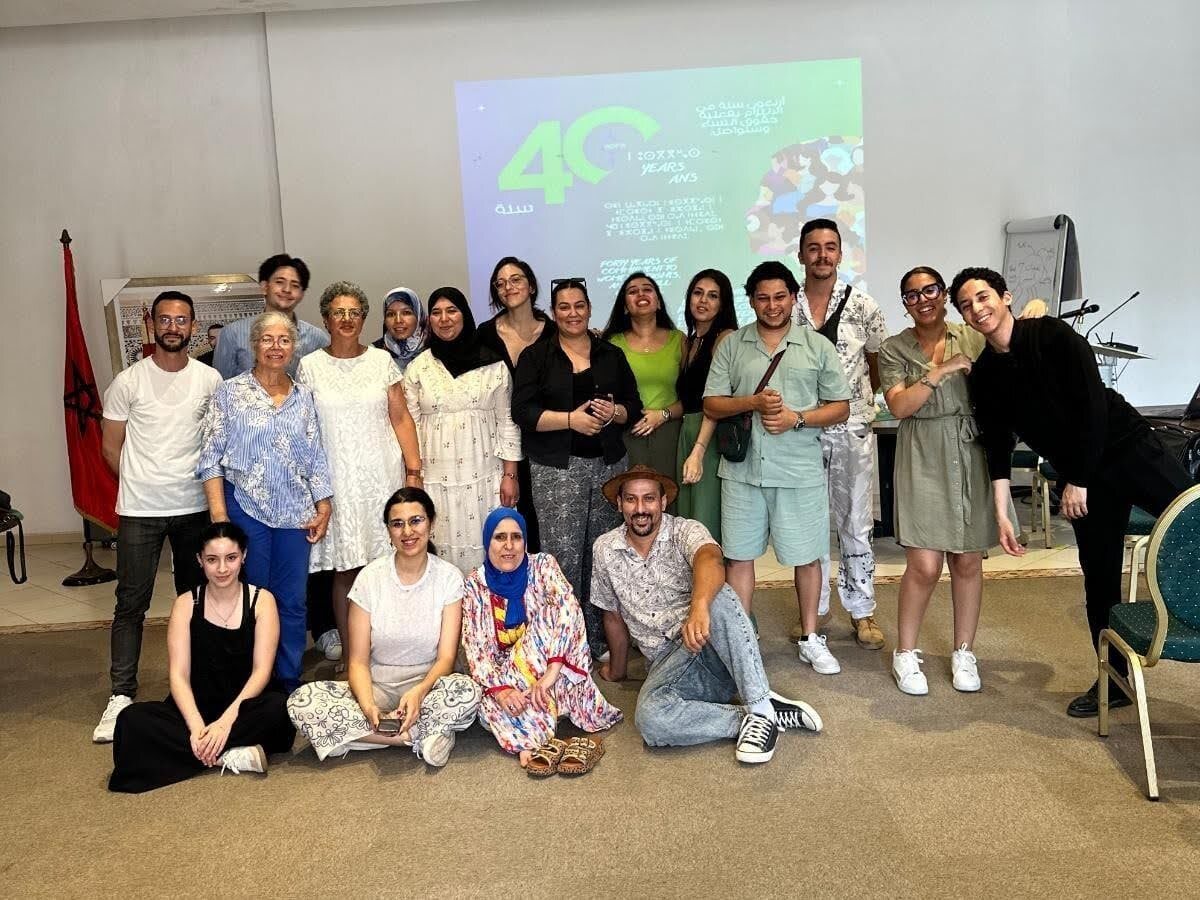
Through a multi-year program focused on family law and the culture of democracy, ADFM is engaging intergenerational leaders in exploring how inequality is structured, and how it can be collectively challenged.
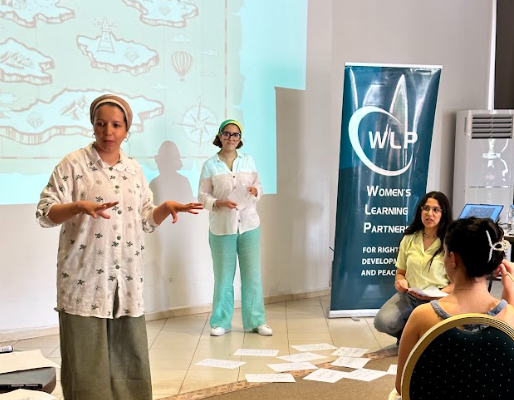
Participants have examined Morocco’s family code alongside international human rights frameworks, connecting legal principles to lived realities such as inheritance inequality, polygamy, forced marriage, guardianship and custody, and gaps in recognition and rights.
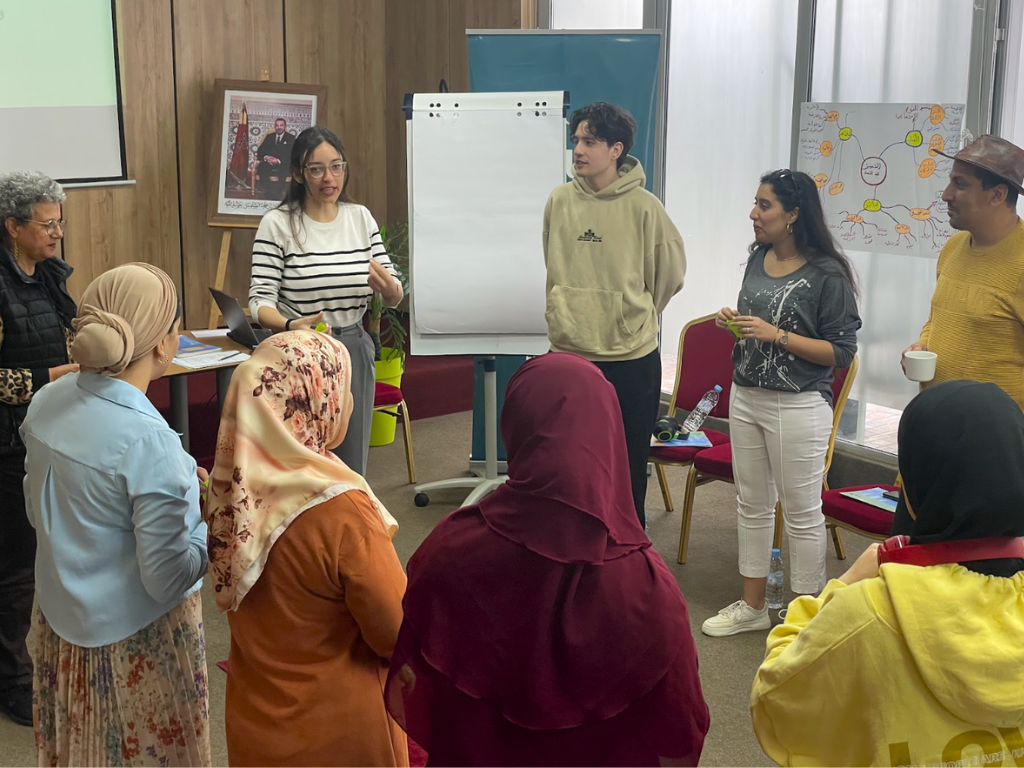
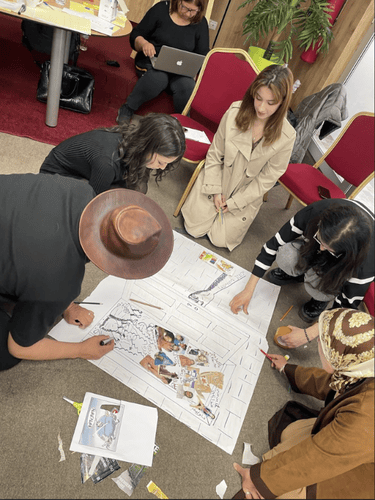
At the same time, they engaged creative expression — through theater, storytelling, visual art, and digital media — to explore how these inequalities are experienced and sustained. In one workshop, participants translated their perspectives into collages and performances, revealing how gender inequality manifests across homes, schools, and public spaces. In another, they reinterpreted cultural narratives, including proverbs, to challenge the assumptions embedded within them.
“Art can help us break barriers and start difficult conversations. It allows us to express what words cannot.”
— Hafsa Erraboun, Artist and ADFM Program Participant
These processes did not end with reflection. Participants developed advocacy initiatives, campaigns, and creative projects aimed at shifting both policy and public understanding. Their work is ongoing, engaging community leaders and youth, challenging dominant narratives, and calling for reforms in law and practice.
Reimagining What Families Can Be
Families are not fixed. They are shaped by the systems and stories that surround them. On this International Day of Families, this work offers an important reminder: advancing equality within families requires both structural change and cultural transformation.
By linking legal reform with narrative change, ADFM — and the broader Women’s Learning Partnership network — demonstrate how change becomes possible: not only through laws, but through the ways people understand, question, and reshape the norms that govern their lives.