
Earth Day is often framed as a moment of awareness. But for feminist climate leaders across the globe, awareness is not the problem; power is.
In recent months, the Women’s Learning Partnership (WLP), along with Project Dandelion, convened an intergenerational dialogue with partners and allies working at the frontlines of climate justice. Spanning regions, generations, and lived realities, the conversation surfaced not only the urgency of the climate crisis, but a deeper and more troubling truth: the people already leading solutions remain structurally excluded from decision-making.

The Leadership We Already Have
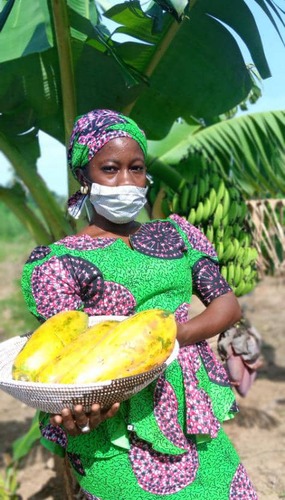
Across contexts, from drought affected communities to conflict settings, women are already leading climate responses. They are sustaining livelihoods, protecting ecosystems, and building resilience under the most difficult conditions.
Yet their leadership continues to be framed as informal or anecdotal, rather than recognized as what it is: scientific, credible, and essential to climate solutions. This reveals a fundamental contradiction at the heart of global climate discourse. The issue is not a lack of leadership. It is a failure to recognize, resource, and redistribute power.
A Crisis of Trust
Reflections on COP30 reinforced this disconnect. Participants described a process marked by exhaustion, frustration, and a growing sense that climate action is losing political urgency. Government engagement appeared to decline, and opportunities for meaningful exchange between institutions and civil society were limited.
At the same time, a deeper crisis is unfolding — a crisis of trust:
- Trust between communities and governments.
- Trust in international agreements.
- Trust that climate commitments will translate into real change.
Without rebuilding this trust, climate governance risks becoming increasingly detached from the realities it claims to address.

When “Green” Becomes Extractive
Another tension emerged clearly: the rise of so-called “green” transitions that replicate the very systems they claim to replace.
Participants pointed to forms of “green extractivism” — where environmental solutions are pursued without regard for local communities, reproducing patterns of exclusion and harm.
Without a justice centered approach, the transition risks becoming extractive in new language.
This is where feminist leadership is not simply additive, it is corrective. It insists on accountability, participation, and the centering of lived experience in decision-making processes.
From Dialogue to Structural Change
For decades, climate discussions have emphasized participation. But feminist leaders are clear that participation without power is not enough.
What is needed now are structural shifts, including:
- Gender quotas in national climate delegations
- Gender-disaggregated climate outcomes
- Direct financing for local and frontline actors
- Civil society participation in accountability mechanisms
These are not symbolic demands. They are practical steps toward aligning climate governance with the realities of those most affected.
A Different Vision of Climate Leadership
What emerged most powerfully from the dialogue was not just critique, but a different vision of leadership.
Leadership that is:
- Grounded in lived realities
- Collective, rather than individual
- Intergenerational, bridging experience and innovation
- Transnational, connecting local struggles to global change
This is the kind of leadership that WLP’s partnership model has long sought to nurture — where local leadership becomes collective power, and collective power drives systemic change.
This Earth Day
This Earth Day, the question is not whether solutions exist. They do, and they are already being led by women across the globe.
The question is whether we are ready to shift power to those who have been leading all along.