
Photo by: Larissa Primo
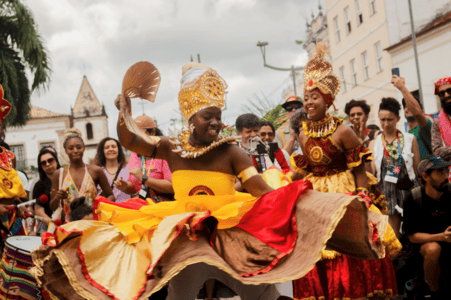
On November 5, Women’s Learning Partnership (WLP) joined artists, activists, and movement leaders from around the world at the Second Global Artivism Convening in Salvador, Bahia, Brazil, one of the most vibrant cultural capitals of the African diaspora. Our session, “From Protest to Performance: Artivism for Gender Justice,” explored how creativity fuels resistance, shifts social norms, and sustains feminist movements across the Global Majority.
For WLP, artivism is not new. It is woven into our 25-year history of movement-building and collective action. From our earliest Lifelines: The Poetry of Human Rights gatherings at the UN Commission on the Status of Women to today’s youth-led festivals, storytelling workshops, and multimedia campaigns, art has long been a bridge between personal testimony and political change. As Co-Executive Director Leila Golestaneh Austin shared in her opening remarks, artivism is intrinsic to WLP’s theory of change: normative transformation rooted in empathy, creativity, and collective power.
Why Artivism, Why Now
Across WLP’s global network, partners are using art to interrupt dominant narratives, challenge discriminatory laws, and reimagine what justice can look like. In a moment of unprecedented backlash against feminist movements that is marked by shrinking civic space, surveillance, and escalating political violence, artivism is becoming essential infrastructure for resilience. Art does what data or policy briefs cannot. It makes rights felt, rather than just understood; it creates entry points for difficult conversations; it restores imagination even in contexts of fear or fatigue; and it reaches broader audiences, inviting new allies into movements for justice and social change.
Our session in Salvador brought these ideas to life through three interconnected components: stories from partners, a live artistic performance, and a participatory artivism exercise.
Spotlight on Partner Artivism: Morocco & Brazil
ADFM (Morocco): Art as a Tool of Liberation
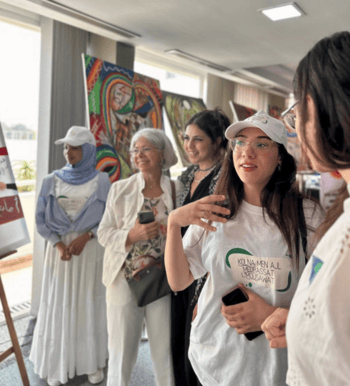
Asmae Aboulfaraj, feminist activist and Program Coordinator for ADFM, traced her organization’s 40-year journey, from courtroom advocacy to creative expression. Facing persistent inequalities in Morocco’s Family Code and widespread violence against women and girls — with more than 70% of girls aged 15–19 experiencing violence at least once — ADFM recognized that legal arguments alone rarely touch the public’s emotional core. They began integrating illustrations, exhibitions, short documentaries, and collaborative artistic spaces into their reform campaigns.
Art, Asmae explained, helps communities “listen differently” — not just with their ears, but with their hearts. It turns complex legal reforms into relatable stories and transforms silence into collective action. Her message was clear. Art is not secondary to activism, it is activism - colorful, emotional, disruptive, and human.
CEPIA (Brazil): Reimagining Reproductive Justice Through Creativity
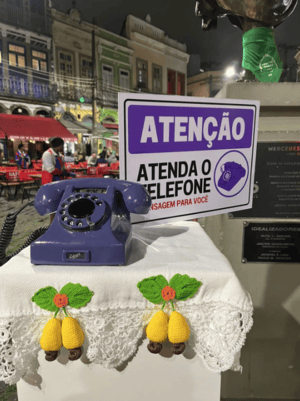
Andrea Romani, Senior Program Coordinator at CEPIA and WLP’s Regional Director for Latin America and the Caribbean, shared how CEPIA has used art across its 35-year trajectory: from short films on adolescent health to parodies that challenge misogynistic music, from mannequin body-painting installations on climate and reproductive justice to national photography prizes on masculinities.
Their latest national campaign calls for updating Brazil’s 1940 Penal Code on abortion which is one of the most restrictive in the world. Using vintage aesthetics, bold colors, street interventions, public projection art, and powerful slogans, CEPIA brings reproductive justice into public conversation in ways that bypass political gridlock and spark empathy. The campaign travels from capital to capital, meeting communities where they are, engaging passersby, and creating shared spaces for dialogue. As Andrea noted, art enables conversations that politics tries to shut down.
Lady B, a 25-year-old black Brazilian singer, poet, and CEPIA collaborator, electrified the audience with the performance of her poem “My uterus, my decision,” a powerful example of her slam pieces on body autonomy and justice.
Artivism Across the WLP Network
Beyond Morocco and Brazil, WLP’s global partners continue to push the boundaries of creative activism:
- Nigeria & Indonesia: Youth use spoken word, theater, and digital storytelling to challenge gender-based violence and advocate for adolescent mental health.
- Kyrgyzstan: For nearly 20 years, Bir Duino’s Human Rights Film Festival has turned cinemas into sites of dialogue, solidarity, and policy advocacy.
- Egypt: In FWID’s leadership camps, young women use pottery, improvisation, and performance to explore identity, agency, and power.
As Leila noted in the session, these initiatives are not “projects,” they are cultural strategies that build empathy, solidarity, and the emotional courage required to transform social norms.
These stories from across our Partnership underscore a shared truth: artivism is not only about presenting powerful messages to an audience, but about creating spaces where people can step into the work themselves. Across the WLP network, partners are redefining activism as a participatory process that invites communities to move from witnesses to makers of culture and change.
From Audience to Co-Creators
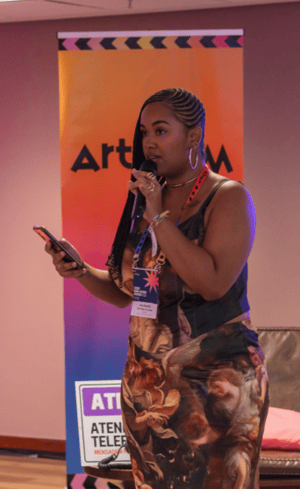
To embody the participatory ethos of artivism, the session shifted from reflection to creation through an interactive artivism practice designed to activate participants as co-creators. Led by artivist Lady B, the collective creation invited participants to imagine gender justice through their own words and emotions. Participants wrote or shared spontaneous lines on what gender justice sounds, looks or feel like. Lady B listened closely, gathering fragments, rhythms, and emotional cues. With these contributions from the audience, Lady B created a spontaneous slam poem. In real time, she transformed collective reflection into a shared feminist artwork titled “Words in Union,” which she performed in Portuguese during the final portion of the session.
“My words hold power
I have so much to say
My voice guides the people to know…”
The poem moved through declarations of justice, aspirations for equality, and a powerful call for solidarity:
“Where prejudice hides, multiplication grows;
Where collective union lives, solutions are born.”
This galvanizing moment of the session was more than a performance to the audience, but a creation with them. It embodied the heart of feminist artivism: imagination as resistance, collective voice as power, and creativity as a strategy for building the world we want.
Why Artivism Matters for Gender Justice
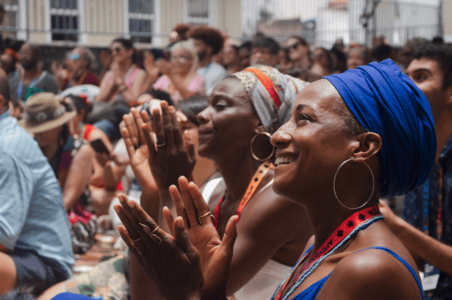
Photo by: Larissa Primo
As the Salvador convening made clear, artivism is a core strategy for shifting norms, expanding civic space, and sustaining movements in an era of escalating backlash. Across the WLP Partnership and beyond, our network continues to show that creativity is both a method of resistance and a catalyst for cultural transformation.
The stories and performances shared in Salvador underscore the power of art to illuminate injustice, humanize policy debates, and open pathways for dialogue where traditional advocacy reaches its limits. They also reinforce what WLP has learned over 25 years: normative change begins with narrative change, and art is one of the most effective tools we have to reshape the stories that define whose rights matter.
WLP remains deeply committed to advancing feminist artivism as part of our broader work on political participation, family law reform, crisis resilience, and reproductive justice. In the face of shrinking civic space, rising authoritarianism, and the intensification of gender-based and digital violence, we will continue investing in creative strategies that amplify women’s voices, nurture collective imagination, and fortify movements with the emotional and cultural resources needed to endure.
Artivism will remain a vital thread in our work: a force that restores hope, strengthens solidarity, and expands what is possible for gender justice movements across the world.