
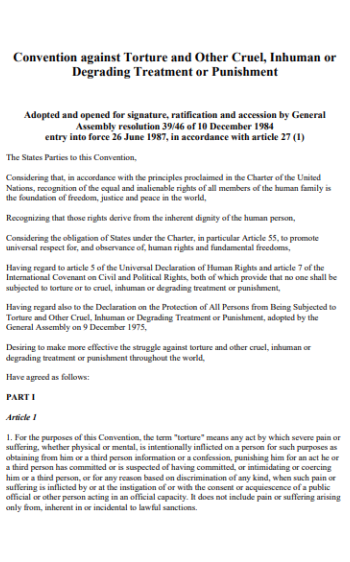
Convention against Torture and Other Cruel, Inhuman or Degrading Treatment or Punishment (document, English)
Resource Type
International Document
Publication Year
1987
Language
English (US)
Topics
Tags
Summary
The United Nations Convention Against Torture is an international human rights treaty designed to prevent torture and all forms of cruel, inhuman, or degrading treatment or punishment worldwide. It obligates member states to adopt effective measures to prevent such abuses within their jurisdictions and prohibits transferring individuals to countries where they may face torture.
Content
- Part I (Articles 1–16): Core Protections
- Defines torture and requires states to outlaw it in domestic law.
- Establishes jurisdiction over offenders, including universal jurisdiction when extradition fails.
- Makes torture an extraditable offense and bans refoulement to countries where torture is likely.
- Requires prompt investigations, exclusion of torture-tainted evidence, and enforceable compensation for victims.
- Obligates training for officials and ongoing review of interrogation and detention practices.
- Extends prevention duties to all cruel, inhuman, or degrading treatment.
- Part II (Articles 17–24): Oversight
- Creates the Committee Against Torture to monitor compliance.
- Authorizes inquiries into systematic torture.
- Provides optional mechanisms for interstate and individual complaints.
- Part III (Articles 25–33): Implementation
- Covers ratification, entry into force, amendments, and an optional arbitration process for disputes.
Source: United Nations (Document Source)