
Across generations, women have shouldered the burden of care responsibilities. Whether single, married, with or without children, women are the ones cooking, cleaning, caring for loved ones, and holding communities together. This work sustains our families and our societies, yet most of it remains unpaid, unseen, and undervalued.
The Culture of Care and Its Hidden Costs
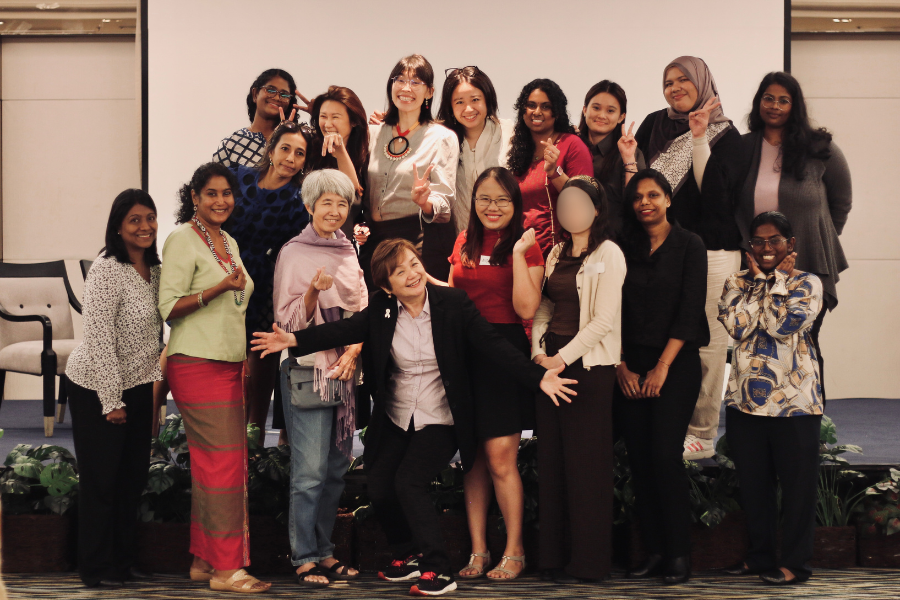
Women from AWAM at their May Day Forum where they discussed systemic barriers women face and advocated for supportive workplace policies.
Throughout cultures around the world, traditional gender norms continue to designate care as a woman’s duty. From a young age, girls are taught to take on caregiving roles, shaping their sense of responsibility and identity1 – often at the expense of their own studies or dreams. As a result, women shoulder a disproportionate share of both paid and unpaid care work. Working mothers usually carry the responsibility in helping children with their homework and school assignments. In many cases, schools often reach out to the mothers first, assuming they are the primary caretaker. Even after children grow up, women rarely find relief. Their caregiving roles often shift toward elderly parents, aging spouses, in-laws, or family members with disabilities. Care, it seems, is an endless duty almost always expected of women.
Communities tend to romanticize care work, calling it a “labor of love,” celebrating women who sacrifice to care for others as a mode of virtue. Religious quotes and sacred scriptures reaffirm such gendered roles, and many women internalize this appreciation as their sense of purpose. Yet when their children leave home, or loved ones pass on, many women experience deep loneliness and disconnection, finding it hard to rebuild social circles or rediscover personal passions after years of centering their lives around others.
The Invisible Backbone of Our Economies – and How Women Pay the Price
Care work is the foundation of every society. It sustains families, nurtures communities, and fuels economic and social well-being. Paid care work includes professions dominated by women such as teachers, nurses, doctors, childcare providers, domestic helpers, and therapists. However, far more care is unpaid, happening every day in homes around the world as women raise children, care for the elderly, support disabled relatives, and manage domestic tasks. Women and girls undertake more than three quarters of unpaid care work and make up two-thirds of paid care work professions.2
Globally, women carry out 12.5 billion hours of unpaid care work every single day. If they were paid for those tasks, they would be contributing an estimated $10.8 trillion each year to the world economy.2 This enormous contribution comes at a cost: less time for paid work, rest, education, and personal care.3 Women and girls spend more than three times more time on care work than men and boys.4 By taking on the load of care responsibilities, women open up more opportunities for their male counterparts, providing them with the time and energy to pursue other interests and career progression.5
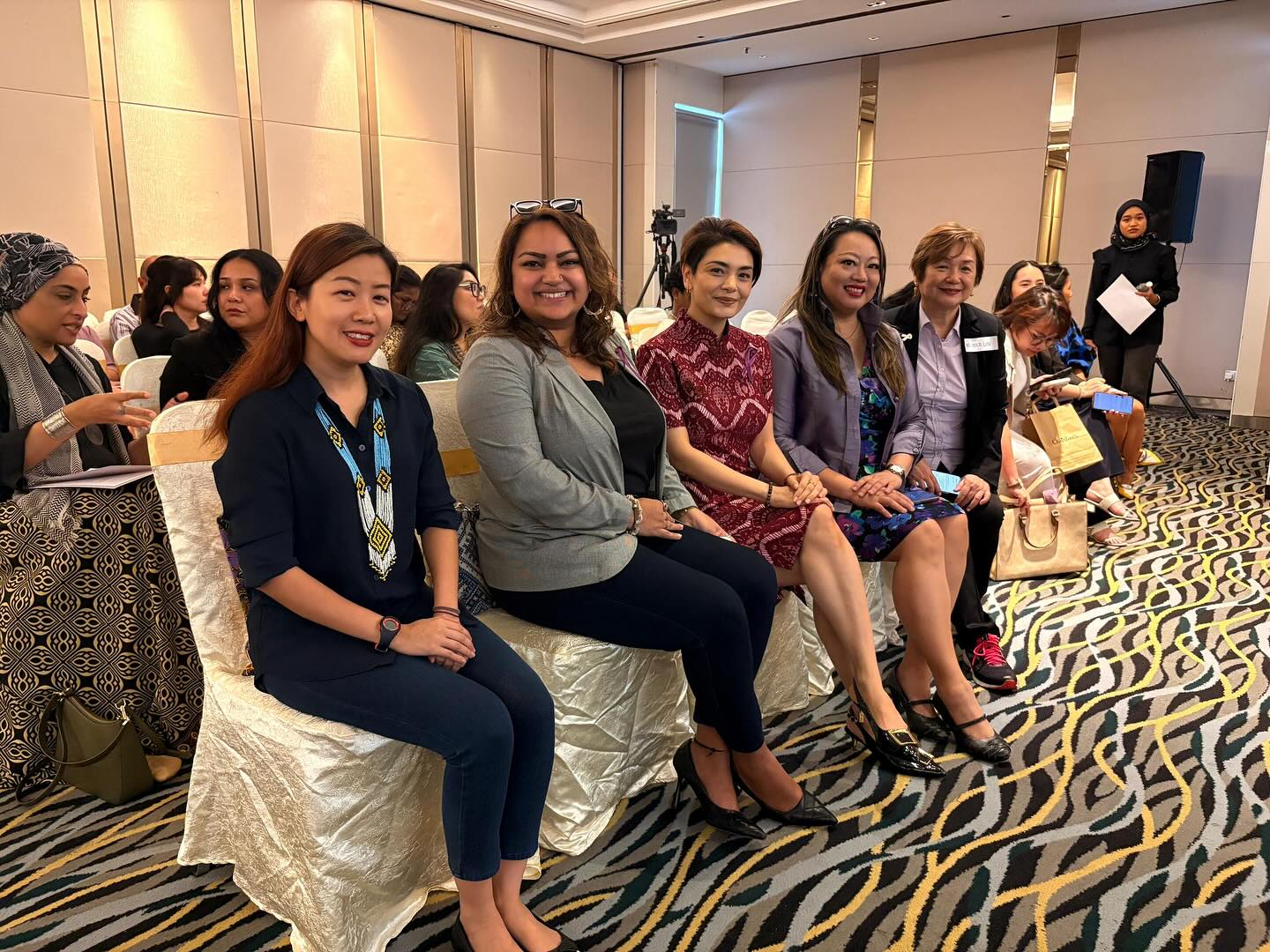
Women from a variety of professions explored their personal journeys, sharing challenges they’ve faced and strategies they’ve used in balancing leadership and caregiving.
Meanwhile, women’s careers and economic independence suffer despite the immense amount of labor they contribute to society. Across the world, around 42% of women of working age are unable to engage in paid employment due to unpaid care and domestic responsibilities, compared to only 6% of men.6 Even when women participate in the paid labor market, women often face bias, lower pay, less legal protections, and limited career advancement.2 Beliefs about motherhood and the care duties typically assigned to women are found to impact female candidates’ perceived competence and recommended starting salary.7 Constraints on women’s career progression are reinforced by unsupportive organizational cultures, biased recruitment, and limited access to training.
Working women endure “double shifts,” performing two or more jobs for the price of one. After a full day at their paid profession, they return home to a second round of unpaid domestic work: cooking, cleaning, and tending to family needs. Those who take a break from formal employment to care for young children often struggle to re-enter the workforce. Many face skills gaps, minimization of their past experience, and barriers to earning a sustainable income.
Over time, this unpaid and unrelenting labor takes a toll — affecting women’s physical health, emotional well-being, and financial independence. Lack of spousal and organizational support increases burnout and psychological distress.8 Too often, women age into poverty and poor health after years of putting others first.
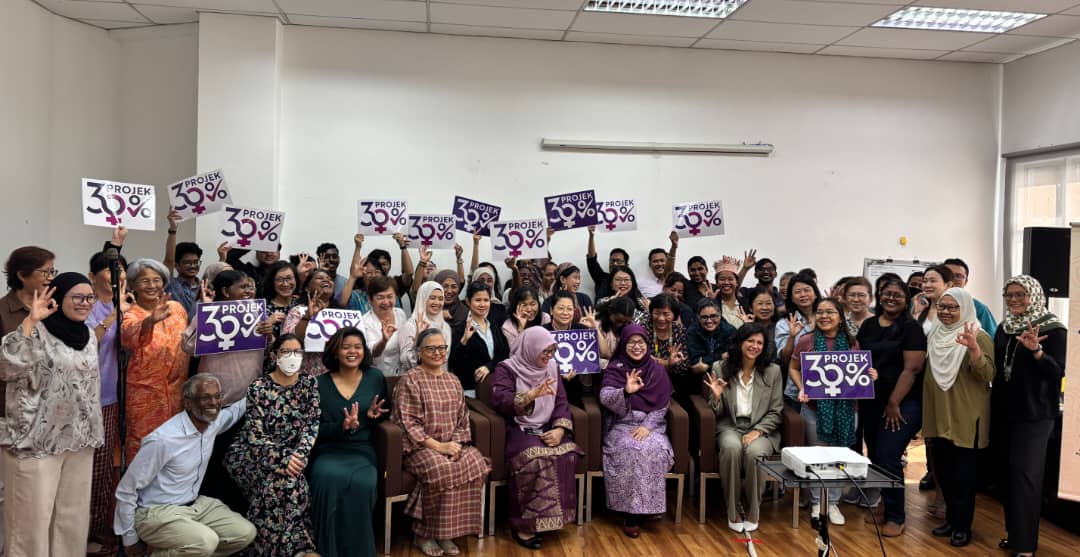
AWAM partnered with EMPOWER to advocate for “Projek30%,” an initiative pushing for all political parties to ensure that at least 30% of the candidates they put forth are women. Women’s political participation is key to securing family-friendly policies that benefit caregivers and support working women.
A Global Wake-Up Call
The COVID-19 pandemic made the true weight of this care work impossible to ignore. When schools and care centers shut down, the load shifted almost entirely to women. With movement restrictions preventing access to domestic helpers or public services, many women had to juggle paid work from home with intensified unpaid care duties.9 When the public care sector–an underpaid and female-dominated industry–was disrupted, the same work simply moved into homes, unpaid, further constraining women’s ability to earn an income or remain in the workforce.10
Many women working during the global pandemic experienced burnouts, career stagnation, and missed opportunities for advancement due to the compounded pressures of professional and household care.11, 12 The COVID-19 crisis was not only a public health emergency, it was a care crisis. It laid bare the structural inequalities that underpin our societies and revealed how women’s economic participation depends heavily on the availability and recognition of care support systems. Until governments and employers recognise, reduce, and redistribute care work, gender equality in the labor force will remain an unfulfilled goal.
The Solution: Family-Friendly Policy Recommendations
Policy and research findings converge on the same conclusion: addressing care burdens and work–family conflict is both a gender equality and economic necessity. To sustain women’s workforce participation, promote leadership progression, and support women’s care responsibilities, countries should:
- Institutionalise affordable, quality childcare and eldercare through public–private partnerships.
- Mandate flexible work arrangements accessible to both women and men to promote shared caregiving.
- Expand paid parental and caregiving leave for both genders, ensuring inclusivity for diverse family forms.
- Embed gender-sensitive practices in organizations, including mentorship, anti-bias training, and transparent promotion pathways.
- Integrate family-friendly policies into national labor and economic frameworks, recognising them as central to inclusive growth.
Empowering women through family-friendly policies is not only a moral or social imperative but a strategic economic investment benefitting families, organizations, and nations.
When a woman earns, she benefits her family, her community, and herself. But achieving that vision requires shifting care from a private burden to a public priority. Gender equality cannot rest on women alone. Parents must raise boys to share household responsibilities. Workplaces must value caregiving rather than penalize it. Governments must invest in care infrastructure as critical as national capital. True gender equality requires policy change rooted in the ILO’s “3Rs” of care: recognition, reduction, and redistribution. Only then can we build economies and communities that truly work for everyone.
1 England, P. (2005). Emerging Theories of Care Work. Annual Review of Sociology, Vol. 31, 381-399.
2 Not all gaps are created equal: The true value of care work. Oxfam International. (2022, May 25). https://www.oxfam.org/en/not-all-gaps-are-created-equal-true-value-care-work
3 Moorthy, K., Salleh, N. M., Loh, C. T., Lai, P. L., & Diong, M. Y. (2022). Gender Inequality Affecting Women's Career Progression in Malaysia. Journal of International Women's Studies, 1-25.
4 Addati et al. (28, June 2018). Care Work and Care Jobs for the Future of Decent Work. ISBN 9789221316428. International Labour Organization.
https://www.ilo.org/publications/major-publications/care-work-and-care-jobs-future-decent-work
5 Rubiano Matulevich, Eliana Carolina; Viollaz, Mariana. Gender Differences in Time Use : Allocating Time between the Market and the Household (English). Policy Research Working Paper No. WPS 8981 Washington, D.C.: World Bank Group. http://documents.worldbank.org/curated/en/555711565793045322
6 OXFAM. (2020). Care In The Time of Corona Virus. Oxfam House, John Smith Drive, Cowley, Oxford, OX4 2JY, : Oxfam GB
7 Correll, S., S. Benard and I. Paik (2007), “Getting a Job: Is There a Motherhood Penalty?”, American Journal of Sociology, Vol. 112/5, pp. 1297-1339, https://doi.org/10.1086/511799.
8 Zakariah, S. M., Yusoff, A. S., Said, M., Mohsin, M., & Otham, Z. (2022). The Experience of Social Support and Role Conflict Among Career Women in Klang Valley. International Journal of Academic Research on Business and Social Studies, 41–54.
9 Chung, H. (30 March, 2020). Return of the 1950s housewife? How to stop coronavirus lockdown reinforcing sexist gender roles. Retrieved from The Conversation: https://theconversation.com/return-of-the-1950s-housewife-how-to-stop-coronavirus-lockdown-reinforcing-sexist-gender-roles-134851
10 Lewis, H. (19 March, 2020). The Coronavirus Is a Disaster for Feminism, Pandemics affect men and women differently. Retrieved from The Atlantic: https://www.theatlantic.com/international/archive/2020/03/feminism-womens-rights-coronavirus-covid19/608302/
11 Rosemary Morgan, H.-L. T. (2022). Women healthcare workers’ experiences during COVID-19 and other crises: A scoping review. International Journal of Nursing Studies Advances , 1-20.
12 Gretchen Berlin, J. C. (2022). Women in healthcare and life sciences: The ongoing stress of COVID-19. Retrieved from McKinsey & Company: https://www.mckinsey.com/industries/healthcare/our-insights/women-in-healthcare-and-life-sciences-the-ongoing-stress-of-covid-19