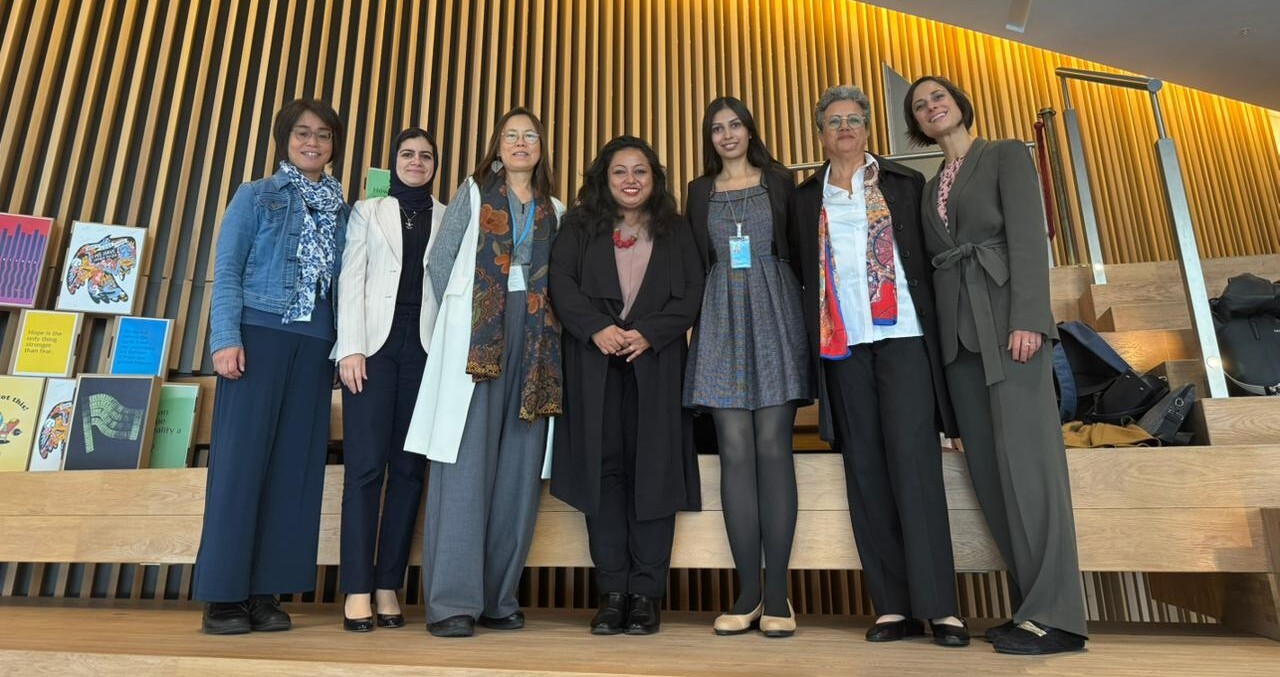
On October 2, 2025, during the 60th Session of the UN Human Rights Council (HRC) in Geneva, WLP as part of the Global Campaign for Equality in Family Law (GCEFL), convened a high-level side event titled “Family Law: A Catalyst for Women’s Economic Empowerment.”
The discussion brought together government representatives, UN agencies, and civil society leaders—including WLP Morocco, the Democratic Association of Women of Morocco (ADFM)—to examine the often-overlooked link between discriminatory family laws and women’s economic participation.
Moderated by Hyshyama Hamin, Campaign Manager of GCEFL, and co-sponsored by the Governments of Kyrgyzstan, Moldova, and the United Kingdom, alongside OHCHR, UN Women, and the World Bank Group’s Women, Business and the Law initiative, the event underscored a powerful truth: without equality in the private sphere of the family, there can be no equality in society.
A Landmark Resolution & Policy Reforms Across States
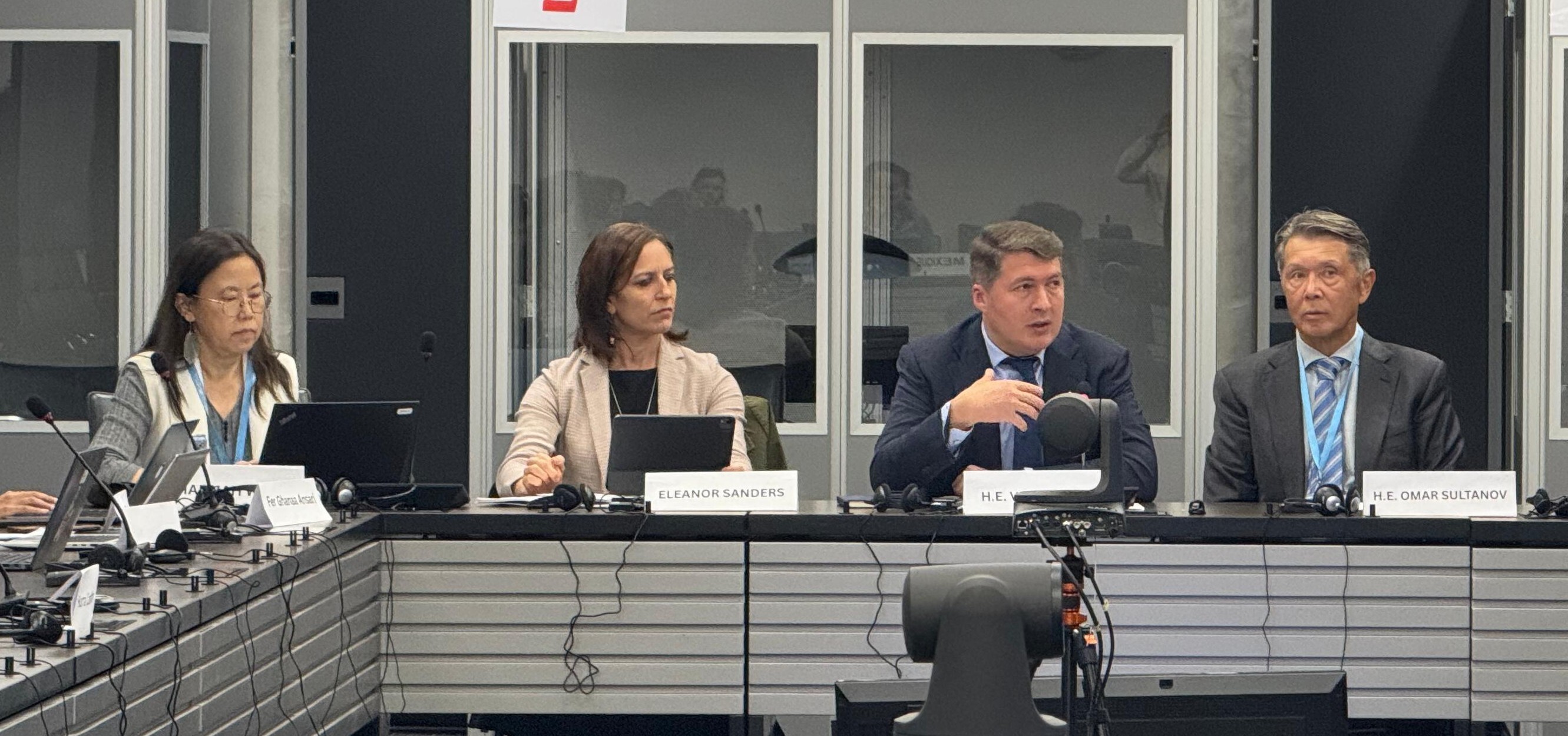
Opening the discussion, Ambassador Omer Sultanov of Kyrgyzstan highlighted a resolution recently adopted at the summer session of the HRC, calling on states to take effective action to repeal or reform discriminatory laws that impede women’s economic empowerment. Co-sponsored by the Dominican Republic, Sierra Leone, Moldova, the United Kingdom, and Kyrgyzstan, the resolution was described as “a crucial first step” that requires sustained advocacy to deliver real change. Ambassador Sultanov underscored Kyrgyzstan's commitment to gender equality and shared some of the steps the country is taking to bridge the gap between its laws and women’s lived realities.
Ambassador Vladimir Cuc of Moldova echoed the importance of reforming both legislation and social norms. He noted Moldova’s high ranking in the Global Gender Gap Report (7th in the world) and highlighted some of the country’s policies that have advanced women’s economic participation including expanded childcare options, flexible parental leave policies for both parents, and subsidies for women in rural areas.
Ambassador Eleanor Sanders of the United Kingdom stressed that laws cannot be viewed in isolation from culture. She pointed to the interdependence of economic rights and social structures in addressing inequalities, underscoring that family law, political participation, and sexual and reproductive rights are inextricably linked.
Representing the UN Office of the High Commissioner for Human Rights (OHCHR), Hannah Wu placed these discussions in the broader context of international human rights frameworks, citing the CEDAW Convention, the Universal Declaration of Human Rights, and the International Covenant on Civil and Political Rights. She underscored that states have a clear obligation to eliminate discriminatory laws and that translating commitments into action requires sustained advocacy, resources, and cross-regional collaboration.
Unequal Laws, Unequal Norms, Unequal Economies: A Panel Discussion
Following the opening remarks by government sponsors, Julia Constanze Braunmiller, Senior Private Sector Development Specialist at the World Bank’s Women, Business and the Law (WBL) initiative, presented compelling new research linking family law reform to national prosperity.
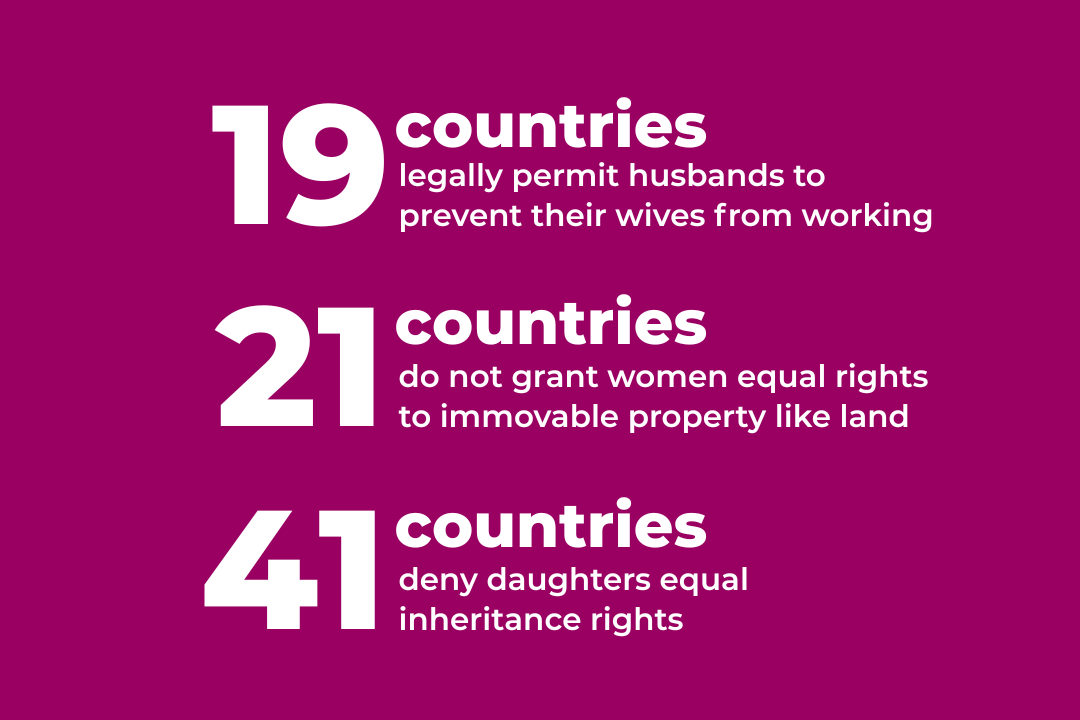
The WBL team’s Changing Laws, Changing Lives policy brief found that since 1970, 600 million women have gained access to better economic opportunities through family law reforms. But progress has slowed. Family law, Braunmiller noted, remains “sticky to reform,” entangled with cultural and religious norms and often dismissed as a private matter.
The findings revealed three pathways through which egalitarian family laws advance women’s economic empowerment: by strengthening women’s bargaining power in the household, enabling control over financial resources such as property and inheritance, and shifting social norms that limit women’s roles in society.
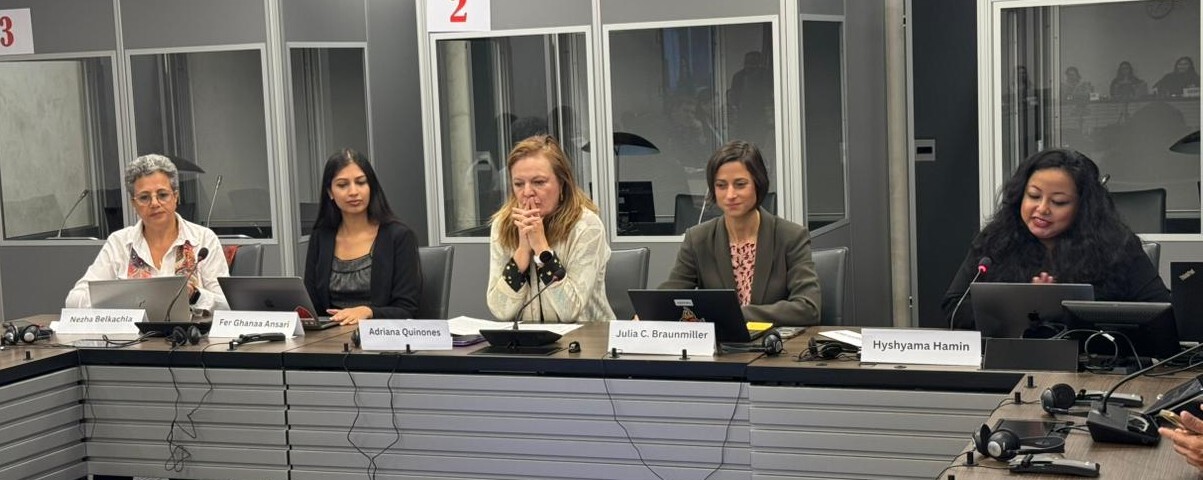
Adriana Quiñones, Chief of Human Rights and Non-Discrimination at UN Women, built on this evidence by emphasizing the need for coordinated global action. While family law is often believed to be too sensitive a topic to address, Quinones argues that family law reform is a necessity to effectively achieve the Sustainable Development Goals. She pointed to recent legal advances as evidence that progress can be achieved when governments, international agencies, and feminist movements work together. However, she noted that legal change alone is not sufficient. “Even though we’ve seen a lot of progress…implementation is lacking,” Quiñones cautioned. Laws on the books must be accompanied by enforcement in society.
Nezha Belkachla from WLP Morocco, the Democratic Association of Women of Morocco (ADFM), highlighted another issue: incremental reform. Reflecting on the landmark reform of the Moroccan Family Code in 2004, Belkachla admits that the legislation was groundbreaking for its time and region — challenging religious taboos and successfully passing the Moroccan Parliament. However, “it did not abolish discrimination in the family law. Patriarchy and male superiority persisted,” she said. In spite of its ‘progressive’ perception, deep inequalities remain in the Moroccan family code, particularly regarding inheritance and property rights. Belkachla reminds us that reforming the family law must be accompanied by a multidimensional approach to equality–working to change attitudes and behaviors, not only laws.
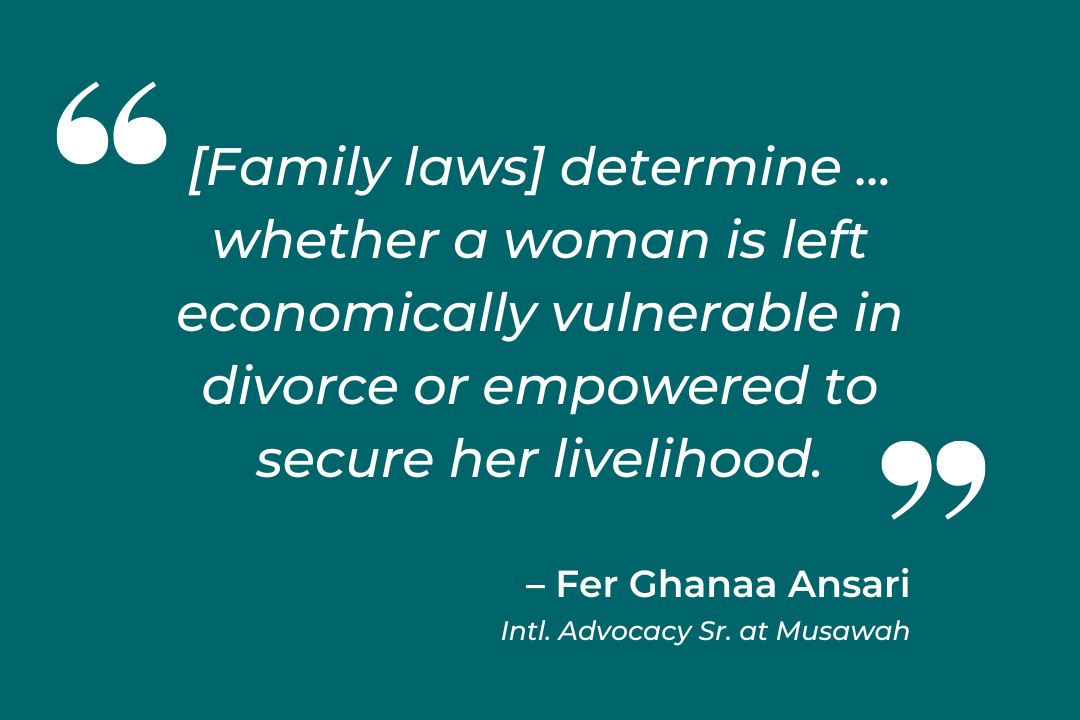
Fer Ghanaa Ansari, Senior Program Officer for International Advocacy at Musawah, shared insights from South and Southeast Asia, where several Muslim-majority countries have successfully advanced reforms from within their religious frameworks. She emphasized that such reforms are not incongruent with religious and cultural principles and that the changes we’re beginning to see can inspire hope. “These Muslim-majority countries that are reforming these laws are justifying it under their own traditional and cultural and religious frameworks,” she explained. “If they're doing it, then other countries can follow suit.”
From Evidence to Action
As the discussion closed, moderator Hyshyama Hamin summarized that research, data, and lived experience all point in the same direction: Discriminatory family laws are a violation of women’s human rights as well as an economic barrier to prosperity for all.
Reforming these laws is not simply a moral imperative; it is an economic necessity. The new Human Rights Council resolution on women’s economic empowerment calls on states to review, repeal, and eliminate laws, policies, and practices that negatively affect the human rights of women. Family law must be central to this agenda.
As WLP and GCEFL continue to work on addressing inequity in family laws across the globe, both research findings and anecdotal truths continue to demonstrate that equality starts in the family.