
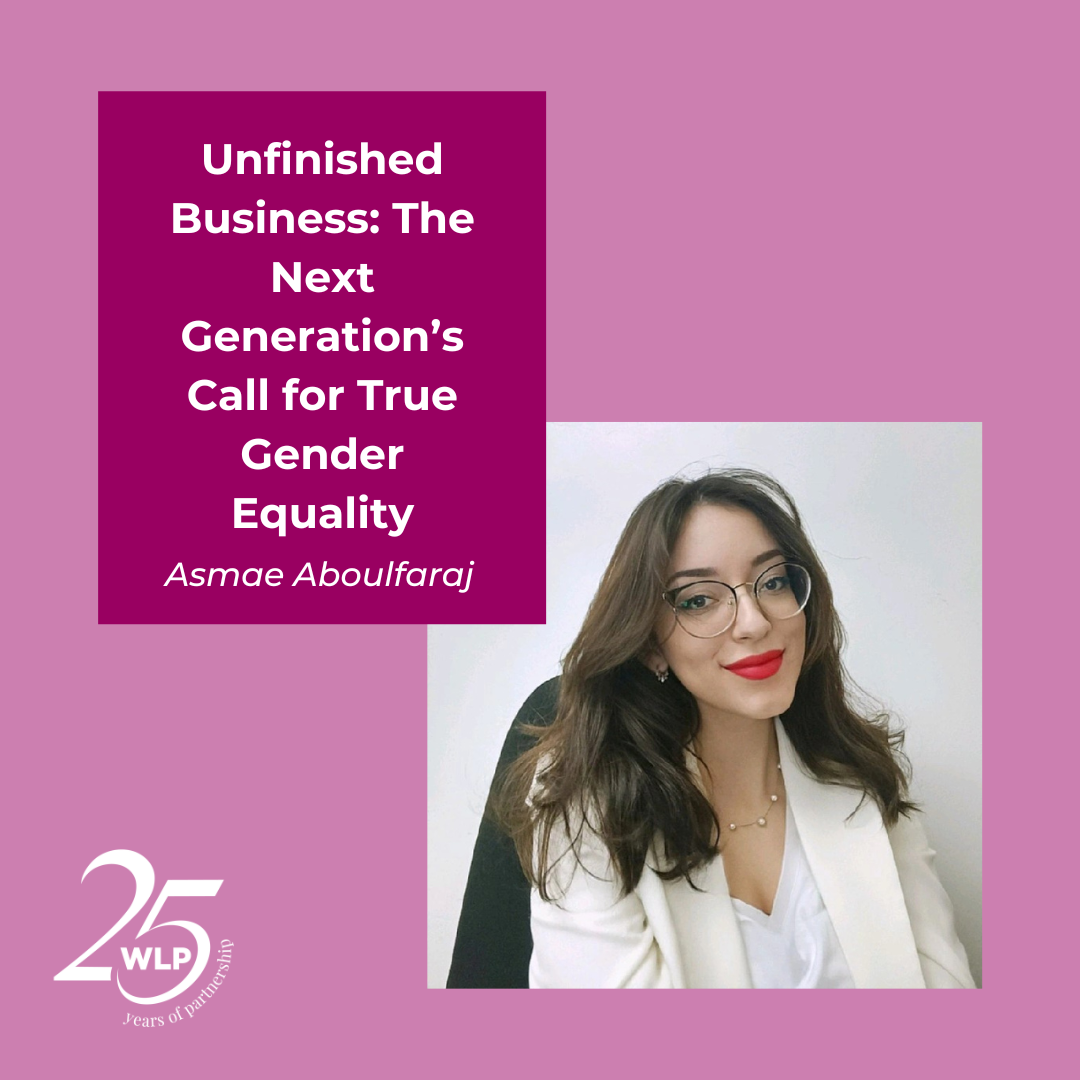
As we mark the 30th anniversary of the Beijing Platform for Action, I feel a conflicting blend of pride for what has been achieved and anger and frustration at how far we still have to go. This moment should be a thunderous celebration of our achievements—a moment of global pride where we can finally shout that, after 30 years, our metrics show tangible progress toward gender equality, safety, dignity, and freedom for all. Especially in this age of extreme technological advancement, we should be basking in the light of our successes. Yet instead we find ourselves confronting a growing backlash against the progress we fought tooth and nail to achieve.
Progress and Setbacks: A Stark Reality
There have been significant advancements since the Beijing conference. Since 1995 (4 years before I was born), women’s voices have become stronger than ever, facilitating many open discussions on issues that were once deemed taboo. Many laws and policies have been reformed to be more inclusive. Education access for girls has improved significantly across the globe. The women’s rights movement has helped build powerful networks, communities, and advocacy groups that empower women, even in rural areas, to boldly speak out against gender-based violence and discrimination while moving forward with economic empowerment, political leadership, and social justice. These are victories that deserve recognition.
However, as I, an activist and young professional from Morocco, reflect on the current state of women’s rights, I can't help but feel a deep sense of disappointment and frustration. How long will we have to keep fighting for something as basic as equality? Beijing +100? Decades after the women’s liberation movement began, my generation is still contending with the same oppressive issues that have haunted the generations before us. The inhumane mindsets and societal barriers persist, and too many women are still living in fear, abuse, and discrimination. Thanks to the courageous women who paved the way, I am here today speaking about this and I am saying that, for far too many, the reality is still a relentless battle against injustice and inequality.
We must be brutally honest: we are all angry with the excruciatingly slow progress that has been made and at the outrageous idea that women’s rights are somehow negotiable or optional. The Beijing Platform for Action is a monumental achievement, yet its principles demand urgent implementation now more than ever. If we are to forge a path toward real progress, states must abandon their empty rhetoric. The injustices are mounting, gender politics are stuck in a toxic cycle that undermines women’s choices, and climate inaction threatens our survival.
This 30th anniversary reminds us of the need to work in solidarity among feminists globally and forge an intergenerational discussion to move forward. We must seize the legacy of the Beijing Platform to advocate for a radical overhaul of legislation and programs that champion gender equality. This means demanding policies that are not just inclusive but actively transformative, responsive to the diverse needs of all women and girls, particularly those from marginalized communities. We need to assess where we are and how to move forward, especially in a world witnessing rising authoritarianism, regressive policies, and the proliferation of media platforms that can easily spread misinformation and fuel attacks on women’s rights. Governments may have signed onto the commitments of Beijing, but the reality on the ground often reflects a lack of political will, insufficient resources, and, in many cases, active opposition to feminist demands.
The Future of Feminist Organizing
If anything defines women's organizing, it is its deep roots in resilience, resistance, and adaptation. The future of feminist organizing depends on our ability to establish intergenerational solidarity across movements, to remain politically unapologetic, and to resist the forces that seek to roll back our rights.
It’s our youth who are now on the frontlines of this fight. When we talk about young activists today, many are navigating a world that is full of potential and, at the same time, contradictions. Some are invigorated, championing radical change and rejecting the notion of incremental progress, while others are overwhelmed by systemic barriers and the enormity of the challenges ahead. In a generation as diverse as ours, we must recognize that there is no single narrative for how we experience or engage with the women’s rights movement.
Feminism is about dismantling power dynamics within structures. Many young activists are redefining what activism looks like, leveraging digital platforms, art, and grassroots organizing to create a movement that is more inclusive, intersectional, and attuned to our lived realities. Yet, they face significant barriers, including funding challenges, burnout, and backlash. The future of the women’s rights movement hinges on our ability to challenge narratives. This generation isn't merely seeking a place within these narratives–we are questioning who built them in the first place.
Part of today’s resistance to feminist organizing comes from the way feminism is often misrepresented; some see extreme voices and confuse the movement with hate against men, which distorts its true purpose and creates a huge wave of disgust and distrust against any person advocating for feminist ideals. Many young people from Morocco do not want to identify with the label feminism even though they believe in the values it represents. All this creates a paradox of stereotypes against feminists, against women, and against men who support gender equality. This distancing from the true meaning of feminism, even by those who support gender equality, makes us rethink collective organizing. It allows opposition narratives to dominate the discourse and frame feminism as divisive rather than a movement for equity. Right now, it’s difficult to predict what’s ahead because the world is constantly shifting, and every day we hear news about something that pushes us many steps back. But despite this, I remain hopeful.
This generation is full of creative and innovative ways of organizing, and I truly believe we are moving forward. However, for women’s movements to thrive, we must break the pejorative connotations and reclaim the true meaning of feminism, one that is intersectional, deeply connected to our humanity, in harmony with nature, and free from the limitations and stress of capitalism.
Another major challenge is funding, as women's rights are often deprioritized and subjected to unpredictable and short-term financial support. Many feminist movements and organizations struggle with restricted or conditional funding that limits their ability to implement long-term, transformative change. At the same time, our movement needs to challenge the funding system itself by collectively advocating for donor practices that are transparent, accessible, and responsive to grassroots realities. We must push for sustained, flexible funding that empowers feminist organizations to lead change on their own terms. We are here for a better society, and that requires resourcing gender justice not as an afterthought, but as a fundamental investment in a just and equitable future.
This moment is critical because before any oppressive system falls, it fights to survive. And that’s exactly what we are witnessing now. The world may feel uncertain, but I see this as the beginning of the death of patriarchy—and we will make sure it does not survive.