
As we commemorate the 30th anniversary of the Beijing Declaration and Platform for Action, we find ourselves at a crossroads. The landmark document, which once ignited a global commitment to gender equality, continues to shape the fight for women’s rights across generations. From seasoned activists who have fought tirelessly since 1995 to young feminists demanding radical change today, the urgency of this moment is undeniable.
A Long Pilgrimage: Reflections from the Pioneers
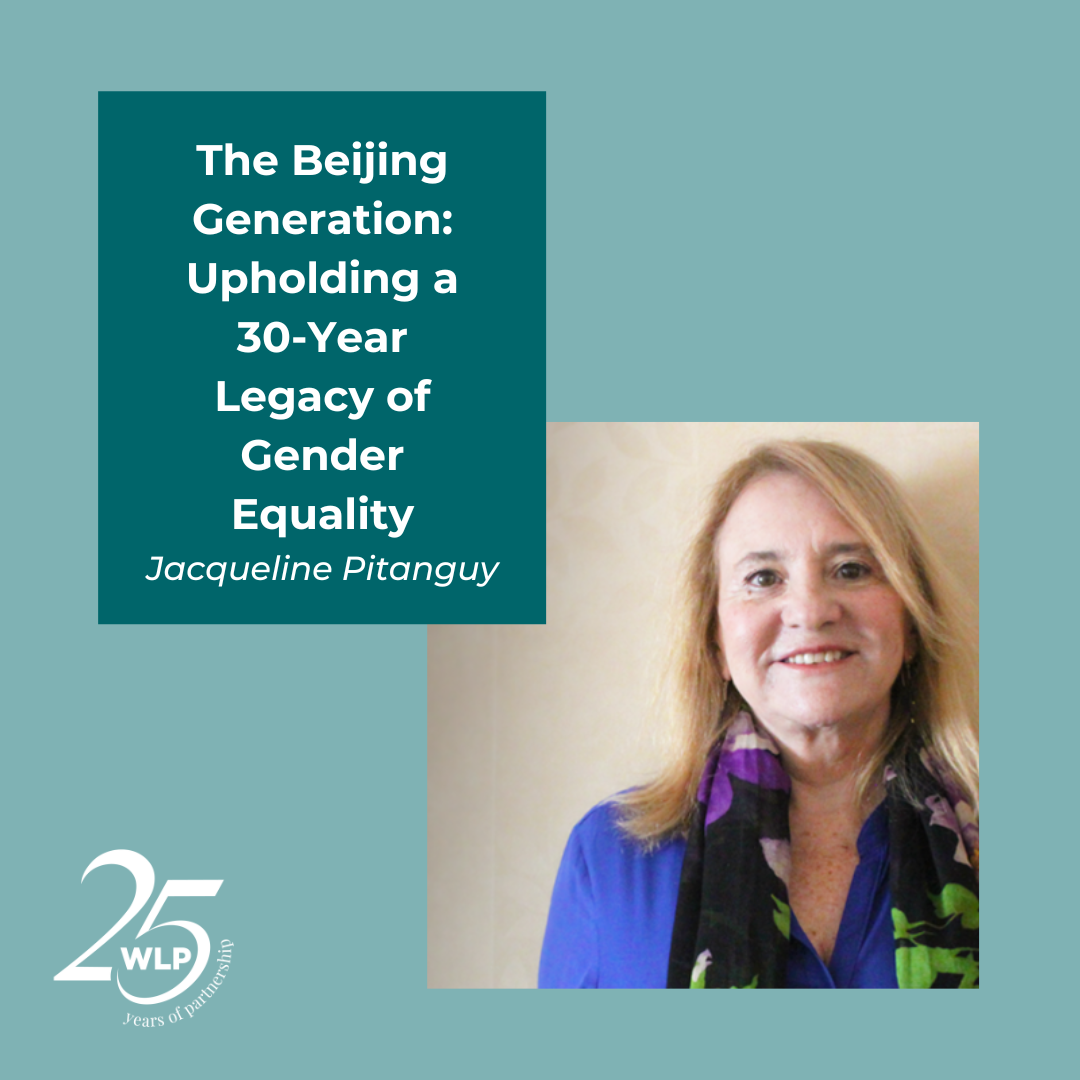
Jacqueline Pitanguy, a former Minister, leader of the women’s rights movement in Brazil, and founder of WLP’s partner organization Cidadania, Estudo, Pesquisa, Informação e Ação (CEPIA), was at the Beijing conference in 1995 and recalls it as a crucial point in a broader journey. “I was part of the Brazilian Delegation, and together with other member delegations of HERA, including the one from the United States, we collectively strategized to influence our governments,” she says. Pitanguy underscores that the Beijing Conference was not an isolated event but part of a “long pilgrimage” of women’s movements that had begun much earlier, noting how landmark conferences such as the 1992 Rio Conference on the Environment and the 1994 Cairo Population and Development Conference led the way for the Platform for Action.
The Beijing Platform for Action (BPfA), she notes, consolidated the political agreements made at these previous conferences and called for policies that affirmed the human rights of women and girls. Despite this, the platform’s implementation has been less than ideal. “If truly implemented by the 189 governments who endorsed and signed this document, the world would be in a different stage of achieving gender equality and human dignity for all. But this is not so,” she reflects, lamenting that the gap between the promise of Beijing and its reality remains vast.
The context in today’s global landscape has shifted considerably since 1995, resulting in some positives that aid our advancement of women’s rights, while also creating new challenges as multilateral institutions lose ground to populist ideas based around conservative patriarchal values. “I believe that resistance is key to preserving what we have achieved in Beijing, which is constantly being threatened,” shares Pitanguy. “To do so, it is necessary to rebuild, maintain, and expand women’s rights coalitions, to build alliances with other civil society organizations, [and to share] knowledge about past achievements and how to defend and advance the agenda [with] youth and society at large.”
Growing Resistance and Backlash: A Middle Generation’s Perspective
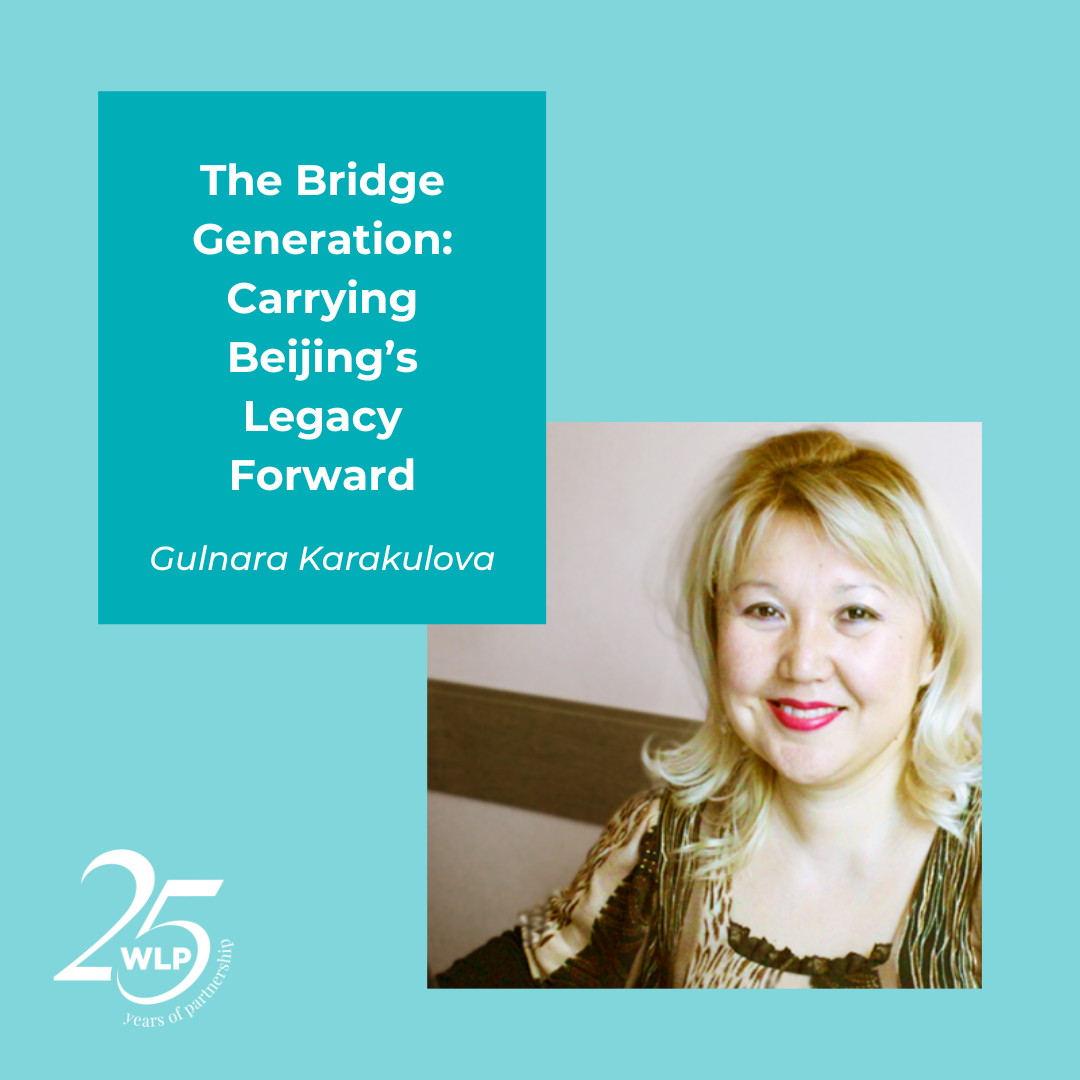
Gulnara Karakulova, from WLP’s partner organization in Kazakhstan, Shymkent Women’s Resource Center (SWRC), represents a generation that has seen both the triumphs and frustrations of trying to implement Beijing’s vision. “The Beijing Platform for Action was an important step towards promoting equality, but many issues remain unresolved and require more active follow-up, particularly women’s involvement in politics and in business,” she explains. Despite improvements in these areas, Karakulova warns that the political space for women’s rights movements has shrunk significantly. She shares, “Kazakhstan is a large state, but our civic space is small, and less than two percent of our civil society organizations are dedicated to gender issues and supporting women’s rights.”
Karakulova is keenly aware of the current global backlash against women’s rights, particularly as it intersects with the rise of authoritarianism and regressive policies. She remarks, “The restriction of space for women is a serious challenge, as it limits women's access to the right to participate in decision-making, and reduces the role of women in the public and political life of society.” But, she reminds us that “The backlash the world is seeing to women’s rights is not new, women’s organizations have always weathered backlash from conservative and anti-feminist movements. However, we respond to this shared challenge by shoring up support and solidarity locally, nationally, and globally while creating sustainable development models.”
Despite the obstacles we face, Karakulova is optimistic about the immense power wielded by women, who have greater access to education, and the potential for technology to amplify the voices of women and promote human rights. Through leveraging digital tools and promoting women in science, technology, engineering, arts, and math, she believes we can create leaders equipped to continue the fight for women’s rights. “The future of women's organizations remains dynamic, flexible, and purposeful because the desire for gender equality is our conscious choice, and every day we are putting in the work to make it a reality for our communities.”
The Struggle Continues: A New Generation’s Call to Action
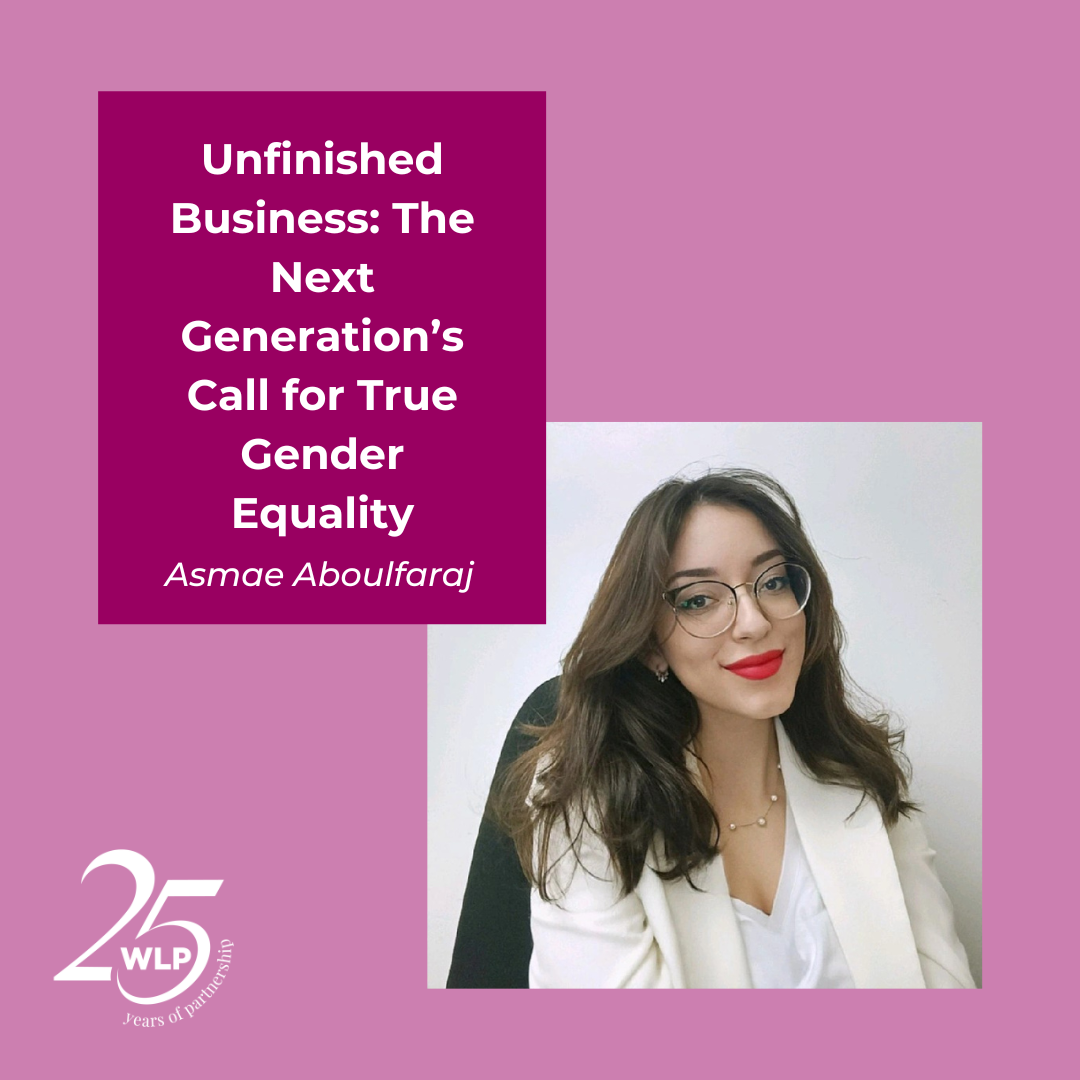
Asmae Aboulfaraj, a young Moroccan activist from WLP’s partner organization, the Association Démocratique des Femmes du Maroc (ADFM), offers a fierce and passionate critique of the state of gender equality today. Reflecting on the 30th anniversary of the Beijing Platform, she expresses both pride and frustration: “This moment should be a thunderous celebration of our achievements... Yet instead we find ourselves confronting a growing backlash against the progress we fought tooth and nail to achieve.”
Aboulfaraj is frustrated at the slow pace of progress. As she reflects on the achievements of Beijing+30, she asks “How long will we have to keep fighting for something as basic as equality? Beijing +100? Decades after the women’s liberation movement began, my generation is still contending with the same oppressive issues that have haunted the generations before us.”
This frustration is coupled with a renewed urgency to take action, calling on feminist movements to incorporate intersectionality and ensure that policies are “not just inclusive, but actively transformative, responsive to the diverse needs of all women and girls, particularly those from marginalized communities.” She notes, “In a generation as diverse as ours, we must recognize that there is no single narrative for how we experience or engage with the women’s rights movement.”
As a young activist, Aboulfaraj sees a clear need to reclaim the true meaning of feminism, which she believes is often distorted. “Many people from my generation do not want to identify with the label feminism even when believing in the values it represents,” she explains, noting the current backlash against feminists. She emphasizes that the future of feminist organizing lies in “our ability to establish intergenerational solidarity across movements, to remain politically unapologetic, and to resist the forces that seek to roll back our rights.”
Despite the obstacles, Aboulfaraj remains hopeful: “This moment is critical because before any oppressive system falls, it fights to survive. And that’s exactly what we are witnessing now. The world may feel uncertain, but I see this as the beginning of the death of patriarchy—and we will make sure it does not survive.”

The Path Forward: What Lies Ahead for Women’s Rights
As we look to the future, it is clear that the struggle for gender equality is far from over. These three voices from different generations and global contexts offer both a sobering assessment of where we stand and a global and intergenerational call to action for what must still be done. Whether it is the pioneering vision of Jacqueline Pitanguy, the dedicated activism of Gulnara Karakulova, or the urgent call for transformative change from Asmae Aboulfaraj, the message is clear: women’s rights are not negotiable, and the fight for gender equality must continue across generations, with resilience, solidarity, and determination.
The path forward may not be easy, but it is one we must walk together. As Pitanguy reminds us, quoting a prominent Spanish poet, “Traveler, there is no path. You make your own path as you walk.”