
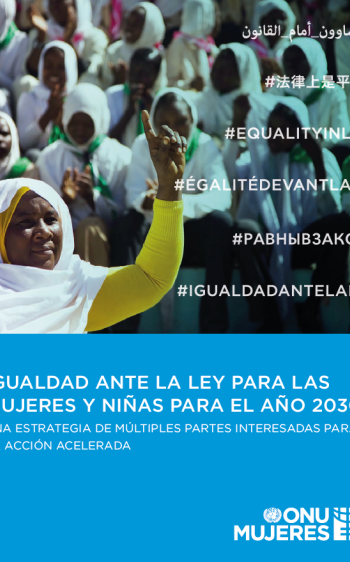
Equality in Law for Women and Girls by 2030: A Multistakeholder Strategy for Accelerated Action (document, Spanish)
Topics
Tags
Summary
This report highlights the widespread impact of discriminatory laws on over 2.5 billion women and girls globally. These laws often exclude women from legal processes and professions, leading to inequalities in areas such as employment, inheritance, citizenship, and marriage. Discriminatory legal frameworks are linked to lower education levels, fewer employment opportunities for women, and increased violence against them. In contrast, reforms that promote gender equality can lead to numerous social and economic benefits, including empowering women, improving education, and boosting global GDP by an estimated $28 trillion by 2025.
The report emphasizes that legal reform, including the elimination of discriminatory laws, is crucial for achieving gender equality and advancing the 2030 Agenda for Sustainable Development. Despite progress in some areas, reforms have been inconsistent. Key drivers of change include international monitoring bodies, civil society advocacy, and judicial activism. However, the report calls for a coordinated, multi-stakeholder approach to accelerate reform efforts, share lessons learned, and create lasting change.
The strategy includes 6 areas of focus, including:
- Comprehensive Reforms
- Promoting Women's Economic Empowerment
- Eliminating Harmful and Discriminatory Minimum Age of Marriage Provisions
- Ending Gender Discrimination in Nationality Laws
- Addressing Discriminatory Rape Laws
- Promoting Equality in Family Relations
Source: UN Women (Document Source)
Resource available in additional languages (link)