WLP Builds “Lifelines” between Art and Activism at Poetry Reading Event During CSW61

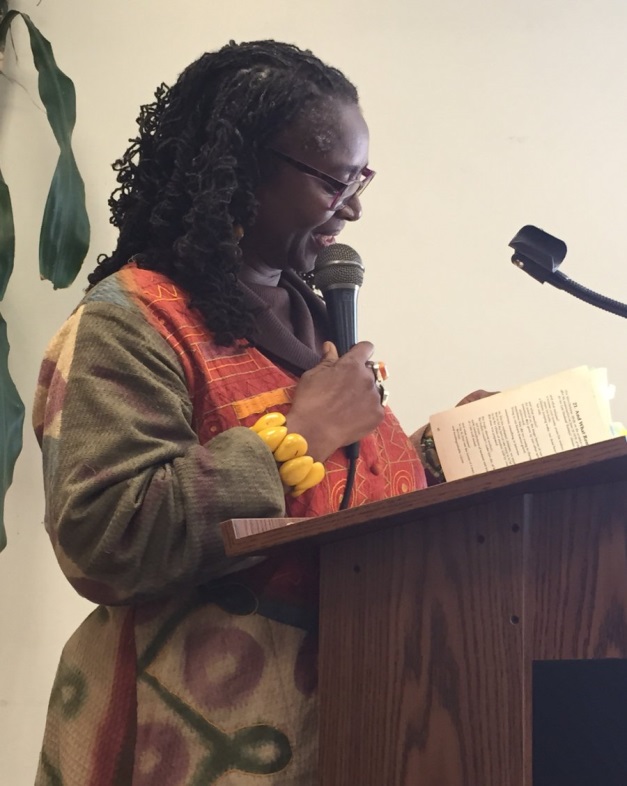
Abena Busia Photo

Dr. Abena Busia reads from her original works.

On March 17, 2017, Women’s Learning Partnership hosted a parallel event to the 61st session of the UN Commission on the Status of Women (CSW61) titled Lifelines: The Poetry of Human Rights. It was held at the Church Center for the United Nations in New York City, convening notable women poets to read their original works to an audience of more than 100 people. The women spoke across ethnic, racial, and socio-economic divides on themes of exile, the process of healing, and peacebuilding.

Lifelines was one of the many scheduled parallel events during CSW61, which ran from March 13-24, 2017. This annual gathering brings UN representatives, NGOs, activists, academics, and leaders from around the world together to discuss the implementation of gender equality mandates and outline further action to promote women’s rights.

First launched in 2000, shortly after the founding of WLP, the Lifelines event series uses the transformative power of art to bring about social and political change. Speakers highlight some of the most pressing challenges faced by women around the world through their poetry or prose.
Karima Bennoune

Karima Bennoune (Algeria/USA) is the UN Special Rapporteur in the field of cultural rights and a professor of international law at the University of California–Davis School of Law.

Karima Bennoune, the UN Special Rapporteur in the field of cultural rights, gave the opening remarks on the importance of the arts in our world.  “Freedom of expression and creative arts are a threat to fundamentalists everywhere,” she observed. Bennoune, who grew up in Algeria and the United States, highlighted some challenges to freedom of artistic expression in the Arab world.

Abena Busia

Abena Busia (Ghana/USA) is Chair of the Department of Women's and Gender Studies and member of the Executive Board of the Center for African Studies at Rutgers University.

In her remarks, she told the story of Palestinian poet Ashrav Fayadh, who was sentenced to death in 2015 by a Saudi Arabian court for renouncing his religious beliefs. His poetry was used against him as evidence of his lack of faith, despite the court later deciding to reduce his sentence to imprisonment.

Tsitsi Jaji

Tsitsi Jaji (Zimbabwe) was born at Nyadire Mission and raised in Harare, Zimbabwe. She currently teaches at Duke University and has recently published her first full-length poetry collection, Beating the Graves.

Bennoune advocated the need to stand in solidarity with Fayadh, who continues to advocate for gender equality through his poetry despite facing backlash from Islamist hardliners for writing poetry on this subject.

Ladan Osman

Ladan Osman (Somalia/USA) has received fellowships from the Fine Arts Work Center, Cave Canem, and the Michener Center. She is a contributing editor at The Offing and lives in Chicago.

The poetry of the three featured speakers provided a fresh take on traditional policy discussions on gender. In honest, raw voices, they detailed their experiences of childhood events, family dynamics, and social expectations that were at times painful and at others full of hope.

Ladan Osman Reading Photo

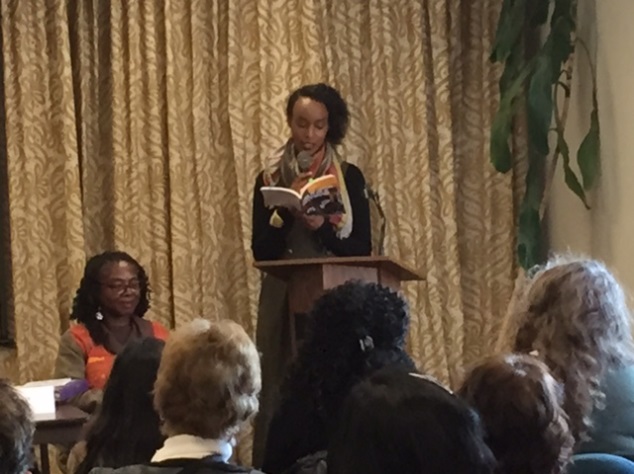
Poet Ladan Osman reads “First Red Dress” from her recently published full-length collection, The Kitchen-Dweller’s Testimony.

“Open the gates and examine us,” Tsitsi Jaji read aloud from her newly released book, Beating the Graves. “We will silence those city bureaucrats who claim girls who learn by firelight will never pass.”

Poets Abena Busia and Ladan Osman recited works about overcoming violence and the devastating effects of violence against women and girls on families and communities. Osman opened her reading by noting how aware women are of the terror of gender violence at a young age. “You come into womanhood, very often, almost dreading it because you know what could be coming and how much more your limitations increase,” she observed before reading from her poem “First Red Dress.”

We are all mothers,
and we have that fire within us,
of powerful women
whose spirits are so angry
we can laugh beauty into life
and still make you taste
the salty tears of our knowledge-
For we are not tortured
anymore;
we have seen beyond your lies and disguises,
and we have mastered the language of words

,AMBASSADOR AND PROFESSOR OF ENGLISH

Afterwards, Busia shared her perspective on exile and migration. “It takes our collective strengths to make sure we survive through it,” she noted.

Through the Lifelines event series, WLP will continue to create a place for activism through art in gender policy discussions. Watch a video excerpt of the 2017 Lifelines below.